Tuesday, November 22, 2016

8 Ways to Become a Morning Runner

I started doing this about six weeks ago, and it has become an integral part of my morning routine and my day. I'm out the door at 5:30 AM, and finished by 6:30. It's not as hard as you might think, but it requires a certain amount of self-motivation to create the habit. Find a way to work it into your schedule if you can.It also makes it easier to get a weight training workout weaved into your day later on, because you feel better about moving your body. 
You can do this if you want to.
======================================


Learn how to kick your day off on the right foot—literally—with help from the top athletes who’ve trained themselves to do it.
By Allie Burdick THURSDAY, NOVEMBER 17, 2016, 5:32 PM

But if you think you’re ready to become a morning person, and take advantage of the benefits of a predawn run, here are three basic tips for how to get started, as well as five suggestions from the pros, who’ve beaten back their own natural inclinations to sleep in, on how to start doing it:

BASIC TIPS

Get enough sleep
You know that alarm is going off early, so make sure to get to bed 7-8 hours prior to the time you need to wake up. You will almost definitely be groggy so allow a few extra minutes to become fully conscious.

Prepare your clothes ahead of time
Check the weather the night before (and the temperature at the time you will be running), then set out your clothes and equipment so you can easily find everything and put it on. You don’t want to be fumbling around in the dark looking for a pair of compression socks. Not sure of the best outfit given the temperature? The Runner’s World What to Wear tool can help you select something that won’t be too cold or too hot.

Warm up
Your muscles are more likely to be stiff, since you haven’t been moving around, so to reduce the chance of an injury, make sure to start with a dynamic warmup—here are 5 exercises to do before your run. 

FROM THE PROS

Find a friend, and be gentle with yourself
Finding a partner to run with will give you someone to be accountable to, and make it much harder to blow off the run. It’s also important to remember that this is a process, and you can’t be expected to do it perfectly from the get-go. But even if you have a setback or two, keep at it. “Once you get into a rhythm it becomes natural and actually jump starts your day,” says Sheri Piers, top American finisher at the 2012 Boston Marathon, and mother of two. When Piers was training for the Olympic Trials on top of taking care of her kids, it meant waking up at 4 a.m. six days a week, sometimes on as little as four hours of sleep to meet with her running partner.

“You need to let your body adjust to getting up. But, once you do, you will never go back,” she says.

Take it slow
“I didn’t decide one day that tomorrow would be the day I wake at 4:30 every morning,” says Kim Nadeau, first American woman at the 2016 USATF Mountain Running Championships, and mother of two. After having her second child, Nadeau realized that getting up early to run was her only option.

“It started by looking at what I did in the morning before my kids got up,” she says. “I realized it was my most productive time of the day. I had often baked muffins and made homemade granola before they came downstairs, still wiping the sleep from their eyes.”

So Nadeau took that energy, and started training from 5 to 7 a.m. each morning. She also invested in an incline treadmill to train for her mountain runs, so she wouldn’t “waste time” driving to a trail.

“Our homemade muffins now come out of the freezer instead of fresh from the oven,” she says. “But the reward has been huge. My kids forgive me.” Yours will too.

Embrace the movement
“The first few steps or blocks will be tough in the morning. They always are,” says Dr. Jordan Metzl, creator of the Iron Strength workout and author of Running Strong. “But once you start moving, you’ll notice that it gets easier and easier the more you go.”

With a practice of more than 20,000 patients, Metzl’s days are jam-packed, so early morning runs are a must—especially given his rigorous training regimen: He’s completed 12 Ironman races and has more than 32 marathon finishes under his belt. Still, Metzl knows how hard it can be to get motivated. Sometimes you have to just do it, and remember that the motivation will come later. “Once you’re 20 minutes into your run you’ll be glad you made it out the door,” he says.

Stay warm
“If I know I have to get up early, the worst part is getting changed in the cold air when you are warm and cozy in your bed, especially in the winter,” says Tina Muir, a member of the Saucony Hurricanes Elite Team, and a half-marathoner with a PR of 1:13. “If I go to bed in my sports braand shorts, all I need to do is throw on the outer layers and head out the door. At least that takes away some of the inconvenience.”

Muir also leaves her alarm on the other side of the room with a motivational note like “Are you going to make yourself proud today?” to help push herself out the door.

Make peace with the pain
“I view waking up early like ripping off a Band-Aid,” says Michele Gonzalez, a running coach, writer, ultrarunner, and full-time working mother of two. “It's gonna hurt for a bit.”

Still, her advice is relatively simple. “You just have to set the alarm early and start doing it,” she says. “After a few days, you'll be tired earlier at night and will start going to bed earlier. Which makes the early alarm feel a bit more manageable.”

After being a stay at home mom, Gonzalez, a West Point graduate and former army captain, and Iraq war veteran, returned to work in Manhattan, which is a long daily commute from her home on Staten Island. Since she wants to spend as much quality time as she can with her boys after work, she gets up nearly every morning at 4 a.m. to do her runs.


Monday, November 21, 2016

The Ultimate List Of 40 High-Protein Foods!

Pump up your protein intake, aisle by aisle, at the supermarket with Bodybuilding.com's top 40 ultimate protein picks!
Let us count the reasons we're obsessed with protein. For one, you need enough of this benevolent macronutrient to build and repair muscle. It also plays a role in revving fat-burning metabolism and reducing the hunger pangs that can lead to an attack on the vending machine. Additionally, protein works to slow the release of carbohydrates into your bloodstream, which can prevent the sudden spikes in blood sugar that are thought to encourage fat storage and sagging energy levels.
Physique-minded individuals should seek out at least 1 g of protein for each pound of body weight to maintain and build muscle. To reach this lofty amount, however, you'll need to make sure your grocery cart is filled with a variety of high-protein fare. Unfortunately, today's supermarkets are flooded with processed foods that can quickly threaten your fitness gains.
That's why we thought it was about time to roll our editorial cart through the major supermarket sections to help you find the biggest protein wallop for your buck. That way you can load your trunk with the necessary building blocks for a body more chiselled than a Roman sculpture.
Check out our top 40 items to put on your protein-friendly grocery list!
And here's another source of info...

How To Keep Your Muscle While Leaning Out

Getting shredded doesn't have to mean losing the muscle you worked years to build. Here are 9 strategies to help you keep the bulk.
When you work incredibly hard to achieve a goal, it means a lot to you. Think about all those years you spent toiling in the gym in the name of adding muscle. Over time, that adds up to a tremendous amount of work—and bulk. There's no way you'd consider giving those gains in muscle back!
But that may inadvertently be what you're doing when you chisel your body fat in pursuit of a rock-hard physique. When you're following a calorie-restricted diet to get super-lean, it takes an incredible balancing act to maximize fat loss while simultaneously minimizing muscle loss.
We can tip the scales in your favor to allow you to hold on to your muscle mass by following a few important training and nutrition tips during a shredding phase.

1. Closely Monitor Your Daily Caloric Deficit

Nothing seemingly says success faster than seeing a big drop in pounds on the bathroom scale. Yet that's likely a warning sign you're losing substantial muscle and body fat.
"To minimize loss of lean tissue when following a calorie-restricted diet, you can safely aim to lose 0.5-1.0 percent of your body weight per week," says Bodybuilding.com nutrition editor Paul Salter, MS, RD. "This equates to 1-2 pounds per week for a 200-pound person. Steeper drops in weight are most likely costing you muscle tissue."
When dieting, a good place to start is determining how many calories and macros you need in order to place yourself in a calorie deficit. A popular and convenient approach is to start with an online fitness calculator that estimates total daily energy expenditure (TDEE). This simple-to-use calculator requires you to provide some basic information: your size, exercise habits, and goals (input fat loss to match your goal for this program). It then estimates the number of calories (and macros) per day to help you reach that goal.
Weigh yourself frequently so you can monitor your progress and make necessary adjustments. "If your weight isn't trending downward, you're not in a deficit," says Salter. "However, if you drop a few pounds in the first 7-10 days (partly because of water loss that first week), you're right where you want to be." Continue with this plan until your weight hits a plateau. At that point, reduce your calories by another 10-20 percent to recreate a calorie deficit.

2. Bump Up Your Protein Intake When Dieting

In the calculations above, calories from fat and carb sources dropped, but protein intake increased. That's not accidental.
"Protein's importance isn't limited to those trying to gain size; if you're dieting, protein is an essential ally," says Salter. "Protein slows digestion and triggers the release of appetite-suppressing hormones, which helps defend against hunger and cravings. Consuming too little protein may result in your hard-earned muscle mass being used as energy. Research suggests consuming 0.8-1.25 grams of protein per pound of body weight may be optimal for minimizing muscle loss during a diet, particularly during a low-calorie or prolonged diet."[1,2]
The additional bump in protein shouldn't come at the expense of knocking yourself out of a caloric deficit. You must compensate by reducing carbs, fat, or a combination of both to maintain your deficit.

3. Consume Your Carbs Around Your Workouts

Because you're cutting one of your body's main fuel sources, carbs, so significantly, your energy may quickly sag. But you still have to make a hearty effort in the gym.
One smart strategy to maximize gym performance and recovery among calorie-restricted lifters is to ensure both the pre- and post-workout meals contain a majority of your day's carbs. That will help fuel your workouts and restock spent muscle glycogen.
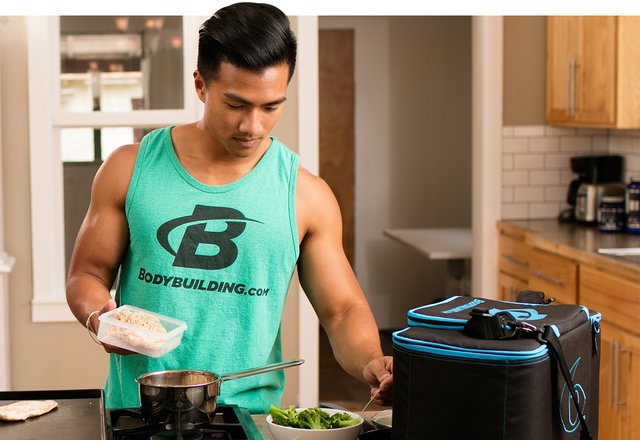
High-fiber, nutrient-dense carbohydrates like brown and wild rice, quinoa, whole-grain breads, whole-wheat pasta, beans, legumes, fruits, and vegetables should make up the majority of your choices throughout the day. These digest slowly and will provide you with long-lasting energy that fuels you for a great workout.
If your pre-workout meal lies within an hour of your training, however, you may benefit from a faster-digesting option to ensure you crush your training without any accompanying GI distress. If you're going to opt for a fast-digesting carbohydrate at any other time of day, post-workout is the time to do it, to help rapidly replenish muscle glycogen stores. Keep in mind, however, that this rapid digestion may leave you feeling hungrier sooner than you hoped.

4. Rely On Multijoint Exercises That Engage Greater Amounts Of Muscle

The biggest fear among lifters who diet is a loss of muscle mass and strength, so set up your training to prevent this from happening.
First, load up your workouts with multijoint exercises, where multiple joints are working in unison. Unclear about which is which?
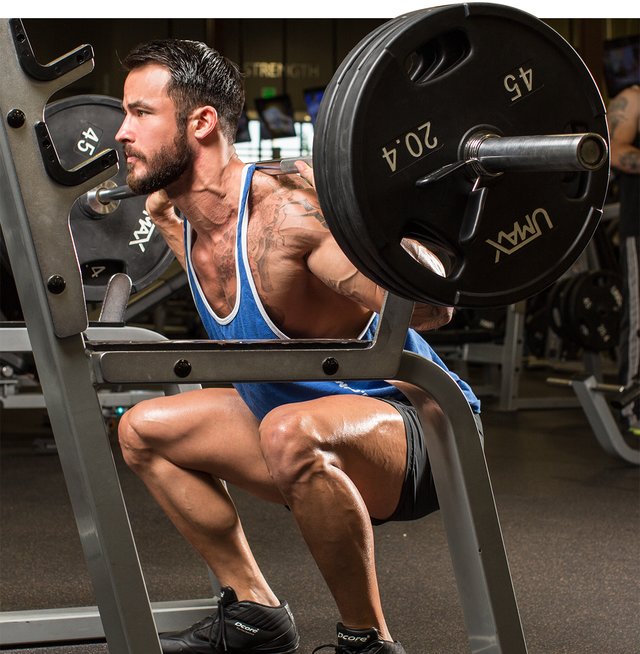
  • Multijoint exercises include squats, bench presses, rows, overhead presses, pull-downs, and the like.
  • Single-joint exercises include flyes, lateral raises, curls, leg extensions, leg curls, push-downs, and similar movements in which movement takes place at only one joint.
Because multijoint exercises engage a greater amount of muscle than single-joint exercises, they help to maintain muscle, which maintains a prediet metabolic rate. Translation: You continue to burn calories and fight back against the typical diet-induced reduction in metabolic rate
You're also able to push far heavier loads when using multijoint movements. Doing so triggers the release of anabolic hormones that can have a tremendous effect of muscle gain and fat burning. That doesn't mean you should avoid single-joint movements. And for all practical purposes, that's almost impossible to do with shoulder, biceps, and triceps workouts. But keep the focus on multijoint moves.

5. Keep Loads Heavy To Moderate At The Start Of Your Workout

There's a misconception that doing more work in the form of high reps is your ticket to burning more calories on a given set. The problem is that you'll have to back off on the load, and in doing so, you'll start to lose the strength-and-size-building stimulus.
Muscle growth is optimized when you choose a load that causes you to fail at 8-12 reps. Strength is maximized when you choose an even heavier load that causes failure at 1-6 reps. When you do 25 reps with a fairly light weight, the emphasis shifts to building muscle endurance. This quality makes a muscle more aerobically efficient, but it has little effect on building muscle size.
While your goal here is to maintain muscle and strength as much as possible when dieting, nothing causes atrophy faster than taking your foot off the muscle-building stimulus. At least toward the beginning of your training session, when you aren't fatigued, provide that stimulus by choosing moderate to fairly heavy loads. Research shows that training with heavier weight (around 6RM) helps you burn calories at a higher rate (above normal resting levels) longer than using lighter loads.[3]

6. Avoid Long Workouts By Getting More Work Done In Less Time

Here's a recipe you'll want to avoid: long, drawn-out workouts combined with a calorie-reduced diet. Otherwise, you'll make the acquaintance of the hormone cortisol. While the hormone testosterone is linked to anabolism (muscle building), cortisol is instead linked to its counterpart, catabolism (muscle loss).
Imperfect estimates say to cap workouts at an hour in length. That's unproven, but we do know the longer you train hard, the more your cortisol levels increase.[4] Isn't that a Catch-22? Longer workouts increase total calories burned, but they also increase cortisol, contributing to muscle loss. The key is to minimize downtime, especially between sets, by completing more work done in the same amount of time.
Enter set-extending techniques. With dropsets, you reduce a working weight by about 25 percent when you reach initial muscle failure and quickly continue the set. With supersets, you pair two exercises back to back with no rest period between them. You can even try density training, a technique in which your between-set downtime is replaced by low-intensity activity to keep your heart rate revved and help you burn more calories without affecting the main movement. 
Such techniques intentionally creep into your rest periods, which can affect your strength levels. But if you save them for the latter half of your training session. you can still get a substantial strength stimulus early on. A well-thought-out plan beforehand is essential for maximizing your results.

7. Do Cardio That Helps Maintain Muscle Mass

Your prescription for taking off the last few pounds of body fat may include additional cardio activity. Choosing the right type, then, becomes more than a choice of opting for the elliptical over the treadmill or bike.
Low-intensity steady-state cardio was once the choice for precontest bodybuilders, and they often did it for hours a day. Now, something called high-intensity interval training (HIIT) is all the fat-burning rage. In a typical HIIT session, you would alternate periods of max effort with backing-off periods. A typical ratio would be 1:4; for example, 15 seconds of max effort followed by 60 seconds of backing off. HIIT boosts your metabolism (meaning you're burning more calories) not just during your training session, but also for as long as 24 hours afterward (called excess post-exercise oxygen consumption, or EPOC). That means the cumulative calories you burn keep adding up all day long.
HIIT is already showing a number of advantages in the lab, namely an improvement in body composition (decreases in fat mass, increases in lean mass).[5] That's on top of improvements in cardiorespiratory fitness, exercise performance, and insulin sensitivity, all of which are good things if you're worried about heart disease and and type 2 diabetes.[5]

8. Use Supplements To Combat Fatigue, Boost Anabolism, And Reduce Catabolism

Thus far, the discussion has covered some unsettling concepts: fatigue, low energy, crammed workouts, even muscle catabolism. No one ever said the process would be easy. So let's consider how a few supplements can make a difference.
Knowing how important protein is to a shredding phase, start with a quality whey protein. Whey stimulates muscle-protein synthesis and slows protein breakdown. Increased protein consumption is also associated with higher rates of satiety (feeling of fullness) and thermogenesis (energy expenditure).[6]
If you're looking for an effective pre-workout supplement, make sure it contains caffeine. Studies have shown caffeine-containing supplements may improve the rate of fat breakdown and reduce perceived exertion during exercise.[7,8] Moreover, green tea extract—specifically EGCG, the primary ingredient in green tea extract—helps boost metabolic rate.[9] The combination has been shown to be more effective for fat loss and increased energy.[10]
Some types of fat, like fish oil, can help you lower body fat while increasing fat-free mass.[11,12]. There's even some research to suggest that supplementing with omega-3s can increase rates of protein synthesis, leading to muscle gain.[13]
Another smart addition is beta-alanine. During exercise, hydrogen ions accumulate because of the increased intensity of your workout, which decreases your blood's pH levels and contributes to fatigue. Carnosine, a dipeptide molecule that beta-alanine helps to produce in your body, serves to buffer hydrogen ions. Supplementing with beta-alanine increases carnosine levels and allows you to work at higher intensity for longer periods of time.[14]

9. Let Recovery Take On Even Greater Importance

Highly charged gym sessions. A more challenging approach to cardio. A calorie-restricted diet. Suddenly, your body is walking a fine line between fat loss and losing muscle that took a long time to build.
That's why adequate recovery becomes so important. Downtime from physical activity can help suppress cortisol levels, so getting a full night's sleep is especially essential. What's a full night? About 8 hours is still a good benchmark. Recharging each day can not only help recharge your internal batteries, but refresh your mind so you're ready to give maximum effort one day after another.
And that's how your battle to get shredded will be won, and it won't mean sacrificing muscle in the process!
References
  1. Butterfield, G. E. (1987). Whole-body protein utilization in humans. Medicine and Science in Sports and Exercise, 19(5 Suppl), S157-65.
  2. Phillips, S. M., & Van Loon, L. J. (2011). Dietary protein for athletes: from requirements to optimum adaptation. Journal of Sports Sciences, 29(sup1), S29-S38.
  3. Børsheim, E., & Bahr, R. (2003). Effect of exercise intensity, duration and mode on post-exercise oxygen consumption. Sports Medicine, 33(14), 1037-1060.
  4. Hill, E. E., Zack, E., Battaglini, C., Viru, M., Viru, A., & Hackney, A. C. (2008). Exercise and circulating cortisol levels: the intensity threshold effect. Journal of Endocrinological Investigation, 31(7), 587-591.
  5. Gillen, J. Low-volume, high-intensity interval training: A practical fitness strategy, WellSpring, 23(4).
  6. Frestedt, J. L., Zenk, J. L., Kuskowski, M. A., Ward, L. S., & Bastian, E. D. (2008). A whey-protein supplement increases fat loss and spares lean muscle in obese subjects: a randomized human clinical study. Nutrition & Metabolism, 5(1), 8.
  7. Costill, D. L., Dalsky, G. P., & Fink, W. J. (1977). Effects of caffeine ingestion on metabolismand exercise performance. Medicine and Science in Sports, 10(3), 155-158.
  8. Arciero, P. J., Bougopoulos, C. L., Nindl, B. C., & Benowitz, N. L. (2000). Influence of age on the thermic response to caffeine in women. Metabolism: Clinical and Experimental, 49(1), 101-107.
  9. Nagao, T., Hase, T., & Tokimitsu, I. (2007). A green tea extract high in catechins reduces body fat and cardiovascular risks in humans. Obesity, 15(6), 1473-1483.
  10. Thielecke, F., Rahn, G., Böhnke, J., Adams, F., Birkenfeld, A. L., Jordan, J., & Boschmann, M. (2010). Epigallocatechin-3-gallate and postprandial fat oxidation in overweight/obese male volunteers: a pilot study. European Journal of Clinical Nutrition, 64(7), 704-713.
  11. Hill, A. M., Buckley, J. D., Murphy, K. J., & Howe, P. R. C. (2007). Combining fish-oil supplements with regular aerobic exercise improves body composition and cardiovascular disease risk factors. The American Journal of Clinical Nutrition, 85(5), 1267-1274.
  12. Noreen, E. E., Sass, M. J., Crowe, M. L., Pabon, V. A., Brandauer, J., & Averill, L. K. (2010). Effects of supplemental fish oil on resting metabolic rate, body composition, and salivary cortisol in healthy adults. Journal of the International Society of Sports Nutrition, 7(1), 31.
  13. Smith, G. I., Atherton, P., Reeds, D. N., Mohammed, B. S., Rankin, D., Rennie, M. J., & Mittendorfer, B. (2011). Omega-3 polyunsaturated fatty acids augment the muscle protein anabolic response to hyperinsulinaemia–hyperaminoacidaemia in healthy young and middle-aged men and women. Clinical Science, 121(6), 267-278.
  14. Harris, R. C., & Stellingwerff, T. (2013). Effect of beta-alanine supplementation on high-intensity exercise performance. In Limits of Human Endurance (Vol. 76, pp. 61-71). Karger Publishers.


The Fall of House Clinton

by JONAH GOLDBERG November 19, 2016 4:00 AM

This time, I think the Clintons might really be finished.

Dear Reader (and all ships at sea), 

Last night was the traditional National Review smoker on our splendid post-election cruise. This is an ancient tradition, the origins of which stretch back into the mists before time and the stories of a young solo sailor by the name of William F. Buckley Jr. — sweat, sea water, and shark blood glistening off his chest — who settled in to enjoy a relaxing cigar after killing the great white beast with his bare hands. 

I bring this up for two reasons. First, to alert the reader that I am feeling a bit hungover from both smoke and spirit alike (so please, stop reading so loudly!); second, because I think I must say goodbye to another great white beast: Bill Clinton — and his remora bride, Hillary. 

This is a good time to do it. The feeding frenzy atmosphere around the Trump transition is bananas given that there’s so little to say about it. My position on Trump remains unchanged from last week’s G-File: Like Bill Clinton after taking a blood test, I am entirely in wait-and-see mode. 

Meanwhile, if I wait too long to give the Clintons a send-off, it will seem not only gratuitous — which would be fine, that’s what I’m going for — but also stale. The bad taste of the Clintons lingers on enough, though — like the acidic after-burp from my lunch in Mexico yesterday — that it still seems a bit relevant.

Read the full article


Tuesday, November 15, 2016

Arnold Schwarzenegger's Workout Tips from A-Z


You probably figure that you mastered the ABCs of bodybuilding during your first month in a gym. But what about the D’s and E’s and even the Q’s and Z’s? Get out your notepad and No. 2 pencil. What follows is an alphabetical training primer from the legendary Arnold Schwarzenegger. It begins with fundamentals—A (abs), B (biceps), C (calves)—but the seven-time Mr. Olympia adds his unique take on each. This guide, true to Arnold himself, will veer far off beaten paths when the Austrian Oak serves up unexpected workout concepts like hypnosis, visualization, and sweating it out in the altogether. Even the 13th Mr. O, Phil Heath, could learn from this lexicon as Mr. O No. 3 reveals the secrets that made him, arguably, the greatest bodybuilder of all-time. Everyone should take notes as Arnold dishes out his A to Z workout advice.

Arnold Schwarzenegger's Workout Tips from A-Z

80-Year-Old Grandpa Rewrites The Rules Of Aging

People tend to associate being old with becoming weaker or being able to do less in general. What if this preconception acts as a self-fulfilling prophecy? Maybe age shouldn't hold you back from attaining your goals.
One man, 80-year-old Deshun Wang, is crushing the stereotype that getting old means that you should just give up on life. You might be surprised to hear that he hasn't always been so physically active, having gone to the gym for the first time fairly late in his life. 
This man truly shows how age shouldn't hold anyone back from their goals. You have to hear Wang's story.

80-Year-Old Grandpa Rewrites The Rules Of Aging


Thursday, November 10, 2016

Seth Andrews: The Mystery Letter

Over these past months on the speaking tour, I've been sharing a very personal story that revolves around a "mystery letter" I received in the mailbox last spring.It's a strange, entertaining, and compelling story which relates my once-held Christian faith, my education, my attitudes, and my liberation from dogmatic religious beliefs.I hope this presentation encourages and inspires you. - Seth

Seth Andrews: The Mystery Letter


Nice Tri: What's Really Wrong With Your Triceps Training

Letting certain joints or bones get slightly out of position can mean losing inches of upper-arm gains! Fix these problems, then go back in the gym to tri again.
There are two major viruses you can catch at the gym that can decimate your training. One is using equipment and benches after a sicko has shared his germs rather than staying home. The other is watching someone else's poor form on an exercise and duplicating it yourself.
Like a nasty bug, bad form spreads from one trainee to another. No amount of zinc or vitamin C can help this, but some tough love definitely can. With an assist from 2015 IFBB North American Championships men's physique winner and Dymatize athlete Brandan Fokken, here are the triceps mistakes you're completely unaware you're making.

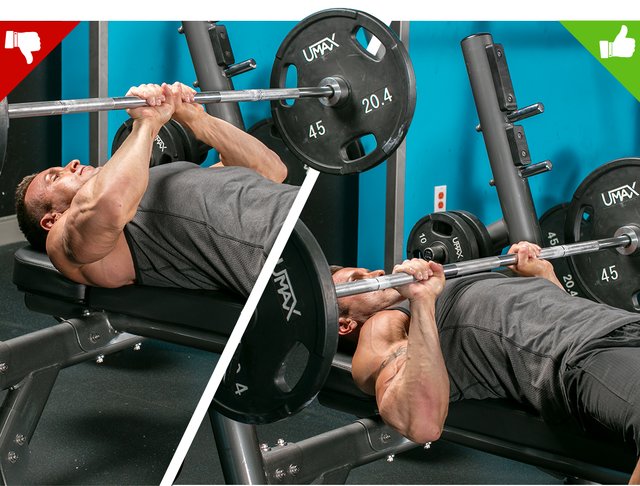
1. Going Too Narrow On Close-Grip Benches

This multijoint exercise might be part of your triceps routine, but did you ever give thought to the optimal grip width? I've seen a number of lifters butt their hands against each other as if this would optimize muscle recruitment. Sorry, but close-grip benches aren't just diamond push-ups under a barbell.
While triceps activation increases once you move your hands in from a regular bench press, no research indicates that it keeps increasing even further as your hands come very close together. What can increase, however, is the strain on your wrists and elbows.
"When I bring my grip in fairly close on the bench press, the movement becomes awkward; I spend most of my energy making sure the bar doesn’t tilt to one side or the other," says Fokken. "That puts far too much pressure in my shoulders and reduces it on my triceps, which is counterproductive."
The solution: Try a grip from 10-14 inches apart, or just inside shoulder width. From there, experiment slightly with hand positions to determine what feels right for you.

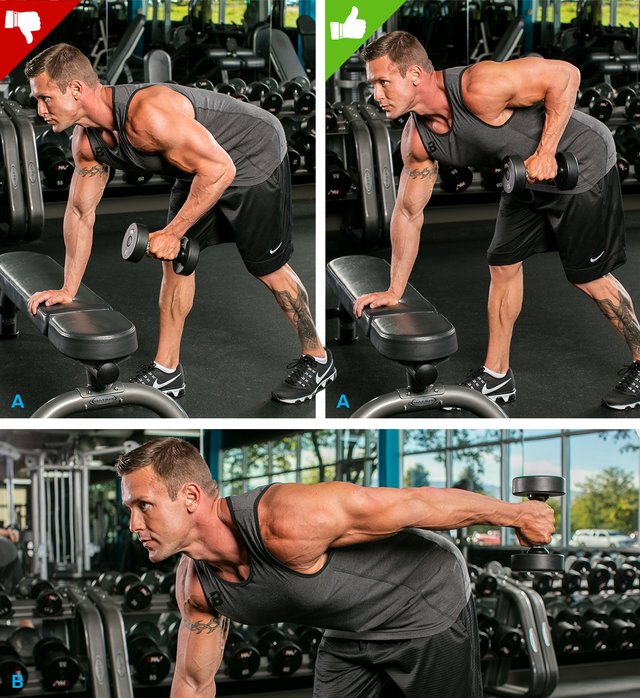
2. Letting Your Elbows Drift During Kick-Backs

This is a common form error even among experienced lifters. Here's what it looks like: From the arm-extended position with your elbow by your side, you allow your elbow to drop along with the forearm as you lower the weight. As you kick your hand backward, you simultaneously raise your elbow back up. This little dance turns a classic single-joint move emphasizing the lateral triceps into one that also recruits the delts.
The solution: To get this isolation movement right, lock your elbow by your side so that your upper arm is parallel with the floor—and keep it there. With the dumbbell hanging at 90 degrees and your elbow serving as a hinge, contract your triceps to fully straighten your arm. As you lower the weight, don't allow your elbow to drop.
"I pay close attention to where my arm—especially the elbow—is relative to my body and really focus on contracting just the triceps," says Fokken. "Do these close to a mirror to watch the movement; start with a lighter weight to get the form down. I think people tend to go a bit too heavy in the beginning, and their form suffers because of it." 

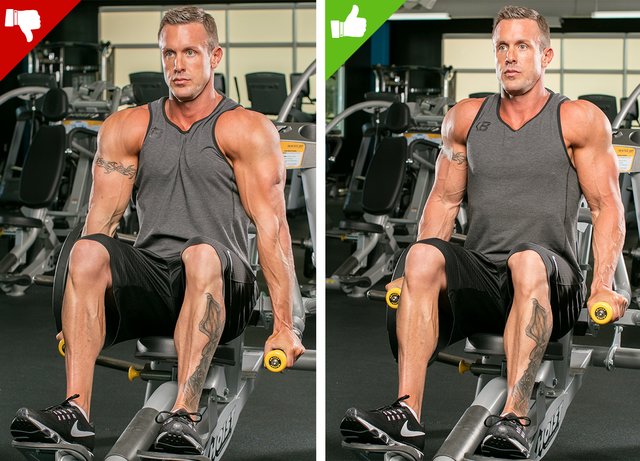
3. Locking Out Your Elbows On Machine Dips

Triceps movements can be tricky when it comes to range of motion. You can hold a dumbbell during a kick-back or a rope handle during a push-down in the full-lockout, peak-contracted position, and get fantastic triceps work. But on movements like machine dips, do the exact opposite of what you want. When locked out in a machine dip, you're using your bones for support, muscular tension is heavily reduced, and the joint is under considerable pressure.
Sure, some people's elbows won't bark under this strain. But if you've got bad elbows, avoid aggravating them by using lockouts.
"At the joint, you're getting maximum surface contact between the two adjoining surfaces, which is especially unwise if you're using relatively heavy loads," says Guillermo Escalante, DSc, ATC, CSCS, owner of SportsPros Physical Therapy Center in Claremont, California. "That also reduces time under tension, meaning the muscles are doing less work—and setting you up for less gains."
The solution: So what's the point of diminishing returns? Escalante warns those last 10 degrees of extension have maximum surface tension, meaning two bones are maximally touching each other. He recommends stopping the movement just short of or right at that 10-degree point.4. Allowing Your Elbows To Flare During Overhead Extensions
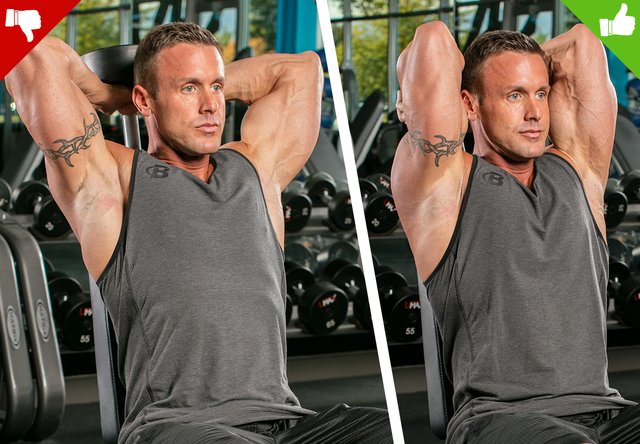
Single-joint exercises for the triceps all have one thing in common: elbow extension. The elbows go from a highly bent position (stretch) to fully straightened (contracted). Simple enough, right? But if your elbows are stationary in a flared-out position in a movement like an overhead extension, you can still lose the movement's isolation and limit its effectiveness by once again turning a single-joint movement in a multijoint one.
Flaring your elbows allows your delts and pecs to assist, which reduces the focus on the triceps. To decrease the amount of stress on your pecs and shoulders, keep your elbows tucked.
The solution: The bad news is that it's hard to keep your elbows tucked in on overhead extensions, especially those done with a single dumbbell. Your elbows will naturally want to flare out, and it's up to you to resist the urge.
Using an EZ-bar and taking a slightly wider grip often makes this challenge somewhat more manageable, but you'll still want to be conscious and wary of elbow flare.

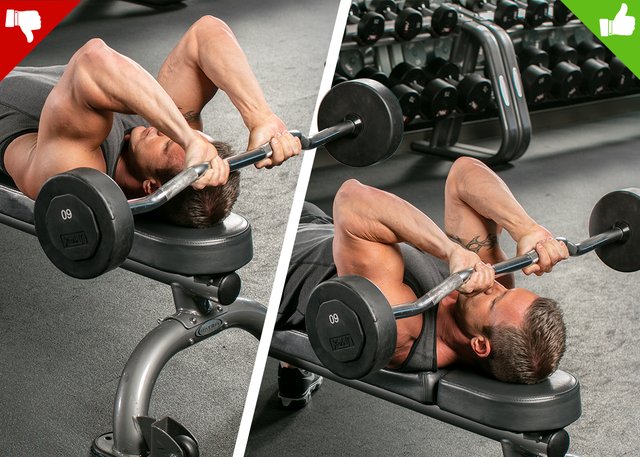
5. Allowing Movement In Your Upper Arms When Doing Skullcrushers

Elbow flare isn't the only way in which a single-joint triceps exercise can lose its isolation effect. Skullcrushers (aka lying French presses or lying triceps extensions) are intended to have movement in only one set of joints. But in the name of looking tough and moving big weights—seriously, you do know what this exercise is called, right?—lifters often allow their upper arms to drift away from vertical.
On the eccentric motion, as the bar approaches your forehead, your upper arms will want to angle backward, ranging from a slight drift to something close to the eccentric of a dumbbell pull-over. Your shoulders, chest, and even lats can get in on the action at that point, and all of their involvement signals stimulation being taken off the triceps.
With skulls, it's sometimes difficult to realize you're guilty of this form faux pas, so it might take a watchful spotter or trainer's eye to tip you off. In fact, it's often helpful if that person physically holds your upper arms in place as you complete a few reps, so you can develop a feel for how it's done correctly.
The solution: The bottom line here is to keep single-joint movements restricted to just one joint for better triceps stimulation. If that means going lighter, so be it.

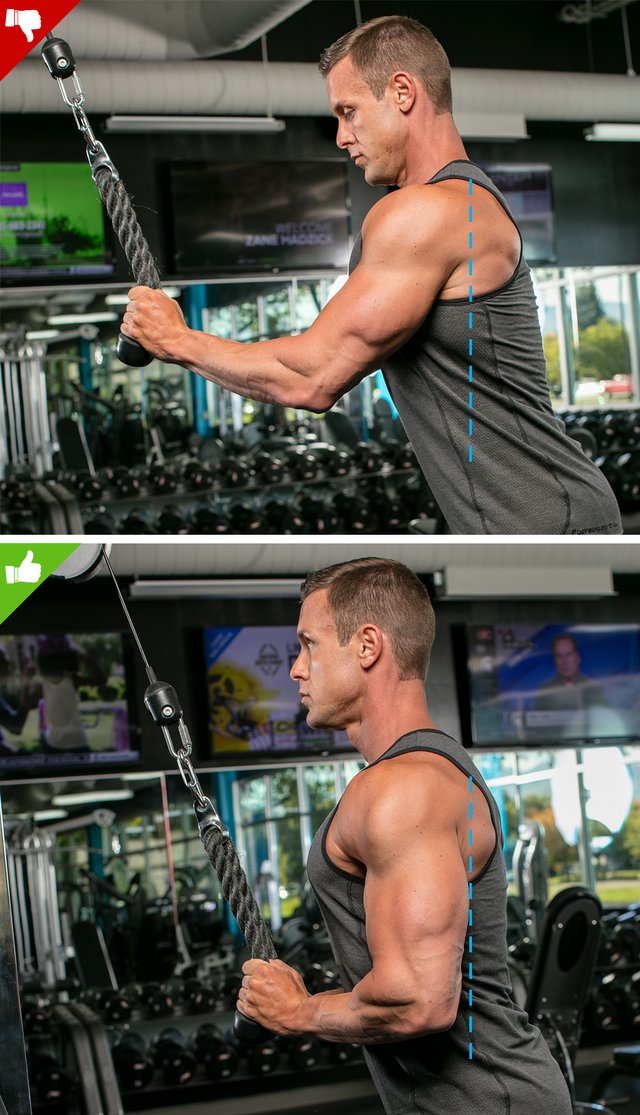
6. Letting Your Elbows Move Forward During Push-Downs

You may think push-downs are a movement basic enough to sleepwalk through and still get a pump. But plenty of trainees get this staple triceps move wrong by not paying as much attention to the eccentric as the concentric.
I'm not just talking about keeping the negative under control in speed, either. As you near the end of the range of motion, you can still allow the weight to keep pulling your hands forward and up, pulling your elbows away from their place by your sides. Once again, you see movement in the shoulder joint, turning a single-joint movement into a multijoint one. All that extra work you have to do on each rep to reposition your elbows back by your sides for each rep is a wasted motion.
"This is an exercise I commonly see done wrong," says Fokken. "As with kick-backs, the elbows are moving forward and back on each rep, making this a multijoint movement and bringing the shoulders into the equation."
The solution: If it's impossible for you to keep from doing this, it means you're going too heavy on, of all things, push-downs. Instead, keep the movement strict by maintaining your elbow position for the entire set, reversing the motion on the eccentric phase before your elbows begin to pull forward.
Maintain this focus on the negative rep as well as the positive, and you'll get a better pump no matter how much of the stack you're using.


Meal Plans Suck

Meal Plans Suck. There’s a better way to transform your diet. 
By Brian St. Pierre, for Precision Nutrition

Almost every fitness seeker starts out asking for a meal plan. The only problem? Meal plans usually suck. Instead of considering yet another doomed eating regimen, there are better ways to transform your diet in a sustainable way.

“Do I get a meal plan?”…This is one of the most common questions we get from folks who are just starting out. Most of us in the fitness industry have learned to avoid these rarely-followed, labor-intensive nutrition tools, but we can’t blame people for asking. Meal plans have long been a staple of the fitness and nutrition industry. Trainers and nutrition experts are taught to create meal plans. Clients are taught to expect them.
Unfortunately, most of the time, meal plans don’t work. Traditional meal plans are explicit prescriptions. Eat this exact thing, in this exact amount, at this exact time. For example, you’ll often see:

Breakfast – 7:30 am: 3 eggs, scrambled, 1 cup vegetables, 1 piece whole grain toast, 1 cup coffee, 1 glass water
Morning snack – 10 am: 1 protein bar, 1 handful mixed nuts
Lunch – 12:30 pm : 4 oz chicken, 2 cups salad, 1 handful seeds, 1 glass water
After exercise – 4 pm: 1 scoop whey protein, 1/2 cup frozen fruit, 1 tsp omega 3 oil, 12 oz water
Dinner – 6 pm: 4 oz steak, 1 cup cooked veggies, 1 baked potato, 1 glass water

You might be thinking, “Good! I want a plan. I’m sick of trying to figure all this stuff out! Just tell me what to eat!” Unfortunately, when we try to follow rigid prescriptions like this, a lot can (and often does) go wrong.

For example:
Scenario 1: You just don’t stick to the plan. No matter how enthusiastic you are, meal plans can be tough to follow. This is normal. Life can get in the way, people get busy, we’re not always prepared, kids get sick, bosses expect you to work late, it’s always someone’s birthday (or a special holiday), and, sometimes you just don’t feel like having a protein bar at 10 am.
What’s more, even if you’ve spent money to have someone make your plan, you might find yourself rebelling against it in subtle (or not-so-subtle) ways. This is also normal. Unfortunately, it means you might not get the results you hope for. For instance, a meal plan you hoped would help you lose weight could actually facilitate 
weight gain instead.

Scenario 2: You follow the plan perfectly. In fact, you follow it too well and for too long. Most meal plans are meant to be temporary. They’re designed to help a person get to a specific short-term goal, like dropping a few extra pounds before a wedding, learning to manage blood sugar, or cutting weight for an athletic competition. Our bodies can usually adapt to a rigid way of eating for a short time, it this isn’t meant to be a lifestyle, so it becomes all too easy to simple stop doing it.

Scenario 3: You follow the plan for a little while but it sucks. It isn’t sustainable. It doesn’t make you feel better. It doesn’t keep you sane. Maybe you see some short-term results (or not). But you hate living and eating this way. You never want to see another stupid piece of lettuce or 4 ounces of chicken. Eventually, you get so turned off by the process that you regress or quit altogether. You conclude that “eating healthy” sucks.
You miss your big chance to learn how to make healthier, more enjoyable, more lasting and real changes.

Another reason meal plans fail: one of the biggest (yet generally unacknowledged) problems with traditional meal plans is their focus on “nutrients”. We typically don’t eat “nutrients”, we eat food. We eat meals, often with other people, we eat meals that match our cultural background and social interests, and there are times we are unable to measure things. Sure, sometimes an explicit prescription is desirable, or even necessary for getting you on the right track, but most of us don’t need to think in terms of surgical precision in order to do that.

Bottom line: If you want to eat better, you don’t have to get weird about things. You just need to think about what the things you’re already eating, and how you could make it a little bit better, healtheir. This means fiddling and adjusting. Making small changes and improvements to what you already normally eat and enjoy, one small step at a time.

Welcome to the meal transformation game. How can you play “make this meal just a little bit better” in every situation? In which situations is that easier or harder? When your choices are limited (for instance, when you’re traveling, or eating at a workplace cafeteria), how can you shoot for “a little bit better” while still being realistic, and without trying to be “perfect”? Let’s transform breakfast, lunch, and dinner. Here’s how that “food spectrum” might look in daily life, with a sample day of eating.


Transforming breakfast
Stage 1: Let’s say that your usual go-to breakfast is a whipped-cream coffee drink and a chocolate croissant. You pick it up in the drive-thru, and wolf it down on your way to work. This is your starting point, but it’s just no longer working for you. You’re getting indigestion from rushing, the croissant doesn’t hold you at all, and you’ve just spilled the coffee on your crotch while changing lanes. Now your game is to improve your breakfast just a little bit, starting with what you already have or do.

Stage 2: Your opening moves in the meal transformation game: you might replace the croissant with a whole grain muffin, instead of a “dessert in a cup”, you get a regular coffee with milk and stevia, and you grab a yogurt cup on your way out of the house for a bit of protein.

Naturally, you’re still rushed and busy… so you eat your breakfast with some distractions, while scrolling through emails at work. But this is a solid start. Well done.

Stage 3: Next level of game play: you switch the muffin to granola with cottage cheese or Greek yogurt, you switch the milk in your coffee for a lower fat variety, or even go right to black coffee, you meal player you! You also add some colorful fruit, and you’re now eating out of dishes on a table, instead of out of takeout packages off the dashboard of your car. Of course, you’re still checking out the news headlines while you eat…No problem. We’re keeping it real.

Stage 4: Now you are seriously playing like a pro. You’ve changed “rushing and panicked” to “set aside a little extra time to enjoy a leisurely breakfast”. You cleverly prepped an egg frittata with veggies in advance on your 
food prep day
. The coffee has become healthier or even swapped out for green tea, since you noticed that too much coffee was tweaking you out. The protein plus colorful fruit and veg have become the stars of the meal. You’ve discovered you really like lemon water. (WHAT? You don’t even know you anymore!) You eat mindfully, feeling relaxed, while watching the sun rise. Ahhh.

Transforming lunch
Stage 1: At this point, starting out, the idea of a sit-down lunch feels flat out ridiculous. “Eat slowly? Who has time for that during a busy workday? Grab a burger and go!” Another “car dashboard” meal, eaten on the go. Another stomach ache and regret. You decide you might want to play with this meal too.

Stage 2: To improve this meal a little bit: You go to a higher-end burger place where you’re pretty sure they use real meat. You get a side salad with that burger, and eat just a couple potato chips. You choose a lightly sweetened tea instead of soda. You don’t eat in your car, but you do eat by your computer. That’s OK. You’re progressing.

Stage 3: At this stage, you’re doing a little prep work. You whipped up some burgers in advance so they are handy and ready to take to work. You also grabbed some nice cheese and whole grain buns from the local market on shopping day. For lunch, all you have to do is take your homemade burger and its fixings to work.  You move from your desk to the lunchroom, where you socialize with coworkers. This slows you down a bit and helps you digest and relax.

Stage 4; You’re having the burger without the bun, alongside a nice pre-prepped salad. Instead of staying at your desk or in the office, you take a break. You sit outside and get some fresh air while you enjoy your meal.  For a drink, water’s all you need.

Transforming dinner
Stage 1: It’s 8 pm. You’ve just gotten home after an insane day at work. All you want to do is put food into your face and zone out in front of the TV. You can’t even imagine making anything more complicated than boxed macaroni ‘n’ cheese right now. Ketchup and hot dogs are as fancy as it gets.

Stage 2: Same concept, but, you’re adding some extra protein with the help of a rotisserie chicken leg that you grabbed at the grocery store on the way home, you’ve added a side salad, just grabbing a few handfuls of pre-washed greens out of a bag, and you’ve whipped up your own pasta. Work is still on your mind, and a couple drinks will take the edge off.

Stage 3: Things are getting fancy. You’re upping the protein with a little more chicken. You’re having a little less pasta. You’ve also added a nice big salad to the mix. You’ve cut the booze to 1 drink. Plus, you’re sitting at the dinner table, instead of flopping down on your couch or standing over the sink.

Stage 4: Again, we’re playing at pro level here. With your meal planning and prep strategies, even a weeknight dinner looks good. You can whip up a delicious salad in 3 minutes flat and you have some pre-cooked quinoa on hand. That rotisserie chicken is still a fast, convenient option, but now it’s got some healthy buddies. You’re indulging in a single glass of good wine these days, and you take time to savor it.
Summary: Meal transformation is not about reaching perfection. If you’re at stage 1, all you have to do is shoot for stage 2. Or stage 1.5. If you’re in stage 2, play with getting to stage 3. And if you’re stage 3, heck, you can stay where you are. You might never get to stage 4. Or it might only happen at times when you’re relaxed and have a little extra time. Stage 4 might only happen on Sunday night, whereas the rest of your week is a mix of stages 1, 2, and — if you’re super lucky — 3. And that’s OK.

How far you progress along the continuum all depends on what YOU want, what YOU need, and what YOU can reasonably do, right now. Over time, things can change. Play YOUR game.


Carl Sagan — A Way of Thinking

On this, November 9th, the day of Carl Sagan’s birthday (1934), we celebrate and remember the man whose contributions and commitment to furthering the work of scientific skepticism have helped make the world a more rational place.
The following is a transcript from the video Carl Sagan: A Way of Thinking, posted on the YouTube Channel Inspiration Journey. The audio is derived from an interview between Carl Sagan and Charlie Rose. Watch the video below.

Carl Sagan — A Way of Thinking

Sagan: It’s not that pseudoscience and superstition and new-age (so called) beliefs and fundamentalist zealotry are something new. They’ve been with us for as long as we’ve been human. But, we live in an age based on science and technology with formidable technological powers.
Interviewer: Science and technology are propelling us forward at accelerating rates.
Sagan: That’s right. And if we don’t understand it — and, by we, I mean the general public — if it’s something that “Oh, I’m not good at that. I don’t know anything about it…” then who is making all the decisions about science and technology that are going to determine what kind of future our children live in?
Way of Thinking (video placeholder)
Interviewer: What’s the danger of all this?
Sagan: There are two kinds of dangers. One is what I just talked about: that we’ve arranged a society based on science and technology, in which nobody understands anything about science and technology. And this combustable mixture of ignorance and power, sooner or later, is gonna blow up in our faces. And the second reason that I’m worried about this is that science is more than a body of knowledge. It is a way of thinking; a way of skeptically interrogating the universe with a fine understanding of human fallibility. If we are not able to ask skeptical questions, to interrogate those who tell us that something is true, to be skeptical of those in authority, then, we are up for grabs for the next charlatan (political or religious) who comes ambling along. It’s a thing the Jefferson laid great stress on. It wasn’t, he said, to enshrine, some rights in a constitution or bill of rights. The people had to be educated, and they had to practice their skepticism and education. Otherwise, we don’t run the government; the government runs us. You see, people read stock market quotations and financial pages. Look how complex that is. People are able to look at sports statistics. Look how many people can do that. Understanding science is not more difficult than that. It doesn’t involve greater intellectual activities. But, the thing about science is, first of all, it’s after the way the universe really is, and not what makes us feel better. And, a lot of the competing doctrines are after what feels good and not what’s true.
Interviewer: Science does not prove religion, because religion is faith-based.
Sagan: Let’s look at a little more deeply into that. What is faith? It is belief in the absence of evidence. No, I don’t propose to tell anybody what to believe. But, for me, believing when there is no compelling evidence, is a mistake. The idea is to withhold belief until there is compelling evidence. And, if the universe does not comply with our predispositions, OK. Then, we have the wrenching obligation to accommodate to the way the universe really is. So, who is more humble? The scientist who looks at the universe with an open mind and accepts whatever the universe has to teach us? Or, somebody who says everything in this book must be considered the literal truth, and never mind the fallibility of all the human beings involved in the writing this book?
I lost both my parents about 12 or 15 years ago. I had a great relationship with them. I really miss them. I would love to believe that their spirits are around somewhere. And, I’d give almost anything to spend five minutes a year with them.
Interviewer: Do you hear their voices ever?
Sagan: Sometimes. About six or eight times since their death, I’ve heard “Carl!” just in the voice of my father or my mother. Now, I don’t think that means that they’re in the next room. I think it means that I’ve had an auditory hallucination about it. I was with them for so long. I heard their voices so often. Why shouldn’t I be able to make a vivid recollection?
Interviewer: Here’s what’s interesting about this for me. You convinced me a long time ago that it was arrogant for me, or for anyone else, to exclude the possibility that there wasn’t some life outside our own, was an arrogance of intellect, that we should not assume. You couldn’t prove it, you didn’t know it was there, but the arrogance…
Sagan: Right. We don’t know if it’s there. We don’t know if it’s not there. Let’s look!
Interviewer: And, if you take that, why can’t you say “There is a lot we don’t know!”?
Sagan: I say it. Watch. There’s a lot we don’t know. That’s what I believe. But that doesn’t mean that every fraudulent claim has to be accepted. We demand the most rigorous standards of evidence, especially on what’s important to us. So, if some guy comes up to me — a channeler or a medium — and says “I can put you in touch with your parents,” well, because I want so terribly to believe that, I know I have to reach in for added reserves of skepticism, because I’m likely to be fooled, and much more minor, to have my money taken.
Interviewer: You are living with myelodysplasia.
Sagan: …or, I have been.
Interviewer: You have been. Just share with us, because of your sense of language and your sense of understanding, what do you think about it and what does it do for you…?
Sagan: I didn't have any near death experiences. I didn’t have a religious conversion.
Interviewer: But you thought about what it would be like to die.
Sagan: Certainly, and what it would be like for my family, and I didn’t much think about what it would be like for me because I don’t think it’s likely there’s anything that you think about after you’re dead. That’s it. A long dreamless sleep. I’d love to believe the opposite, but I don’t have any evidence. But one thing that it has done is to enhance my sense of appreciation for the beauty of life, and of the universe, and the sheer joy of being alive.
Interviewer: You had a healthy portion of that before this, but even you, it happens to: appreciation.
Sagan: Every moment. Every inanimate object, to say nothing about the exquisite complexity of living beings… You imagine missing it all, and suddenly, it's so much more precious.


Tuesday, November 08, 2016

This Election Has Disgraced the Entire Profession of Journalism


We still don’t know the outcome of the 2016 election, in which our “democratic process” has produced two candidates widely despised by the American people, but we do know the race’s biggest loser: reporters and the profession of journalism, which has been reduced to surrogacy, largely on behalf of Hillary Clinton.

Monday, October 31, 2016

Four wheel Harley

I was at the local Harley Davidson dealer this morning picking up a little something for mine when I spied this parked out in front of the used Harley department. I didn't inquire, but took a couple of shots. Have you ever seen anything like this? Pretty cool.


MVPs of Horror: The Woman Behind Elvira, Mistress of the Dark, on Her 35th Year as the Bodacious Horror Hostess

Nothin I can say adds to this article. Just check it out.

The Woman Behind Elvira, Mistress of the Dark, on Her 35th Year as the Bodacious Horror Hostess


Sunday, October 30, 2016

The Great Pacific garbage patch steadily grows worse

This is a problem we created and we must solve, and not leave for the next generation.

The Great Pacific garbage patch steadily grows worse