Wednesday, July 03, 2019

The Church of the Latter Day Dude

I received this back in 2014. 
I haven't officiated at anything yet, but at least I'm ready.


In Dudeness We Abide.


Tuesday, July 02, 2019

Conquer Your Cravings: Break the Sinister Cycle That Promotes Overeating

by Julia Malacoff & Jennifer Nickle (for Precision Nutrition)

From ruining your progress to making you feel like a failure, food cravings aren’t your friend (no matter what they say in the ads). In this article, we break down the real reasons you can’t stop over-snacking and explain how to combine smart behavioral strategies with healthy junk food alternatives—so you can finally conquer your cravings.

Have you ever stared at a pile of crumbs, with a belly full of shame, and wondered, ‘How did I let this happen?’ We can relate. Because almost everyone can relate. Besides driving you to eat, cravings can drive you nuts—making you feel like an out-of-control failure who can’t keep from overindulging. But, you aren’t powerless against these urges, even if it seems that way.

What’s the secret to winning the cravings game? It’s not about eliminating your cravings altogether. That’s wishful thinking. The way you conquer your cravings is by outwitting them. How? By understanding why, where, and when they occur and creating a strategic action plan ahead of time. Think of it as learning “junk food jiu-jitsu”. And if you’re ready, you can start today.

Here are some insights to help you understand cravings so you can get off that train for good, followed by some strategies to help you take action.

     Insight #1: The root of your cravings. No one hates on themselves when they crave a salad, a protein shake, or a grilled chicken breast. But most cravings are closely tied to junk food and have little to do with true hunger. Further, each time you indulge these urges you reinforce the behavior, creating a “cravings cycle” that can hijack your progress… and your sanity.

The cravings cycle works like this: First comes the urge (the craving), followed by the behavior (finding a food that satisfies that craving). Then, you get the reward (eating the food you wanted). That last part is accompanied by a release of dopamine, giving your brain a chemical “hit” of pleasure
1.
From there it can snowball: The more often you reward your brain, the more likely it is to stimulate the craving, and the stronger that craving may become.

   Insight #2: Find your trigger. Ever had your mouth water at the mere sight of a McDonald’s drive-thru? Or smell that movie popcorn and make a beeline for the concession stand—even though you swore you’d skip it this time?

Cravings are often brought on by environmental cues such as sight, smell, taste, location, or company. Tracking when and where your cravings occur can you help you figure out what triggers them. From there, you can adjust your environment and habits to disrupt the cycle.

Each time you experience a craving, jot down the answers to these questions:
   1). What are you craving? (A specific food? A certain flavor or texture?)
   2). Where are you? (Note your location, but also any smells or visual cues—like a restaurant billboard or commercial.)
   3). What are you doing? (Driving? Working? Watching TV?)
   4). What are you feeling physically? (Shaky? Lightheaded? Tense?)
   5). What are you feeling emotionally? (Happy? Cranky? Rushed? Anxious?)
   6). What are you thinking? (For instance: ‘I might as well eat this… I’ve already blown my diet.’)
   7). Who are you with? (Be very specific.)

This isn’t a one-time exercise. It might be helpful to actually keep a cravings journal. Try it for a couple of weeks so you can see what patterns emerge. And trust us, there are almost always patterns.

   Insight #3: Identify & change your patterns. Let’s say you tend to reach for ice cream an hour after dinner every night. According to your notes, you’re not even really hungry; you’re just craving something sweet, salty, or crunchy… or maybe a combination of the three.

Or perhaps you’ve noticed that every day after your 2 pm conference call, you saunter down to the office cafeteria “just to see if there’s anything new.” (There’s not.) And you end up with a 500-calorie “treat” you didn’t need or even truly want out of sheer habit.

You now better understand your cravings and just identified a pattern. Now you can disrupt the cycle with these smart behavioral strategies.

   Strategy #1: Give your craving a time out. Yes, the strategy traditionally used with willful toddlers can also work with Rocky Road. Notice your snack urge and sit with it for 10-20 minutes without taking action.

This isn’t about exercising willpower. It’s about pausing just long enough to let your conscious mind say, ‘Hey, I’m in charge here!’ This gives you the chance to evaluate all your options, and make a rational decision, rather than a reactionary one.

Are you actually hungry? Or are you bored or stressed or procrastinating? Does a steak or baked potato sound good, or is it just those donuts in the break room? These are the kinds of questions you can take the time to ask yourself.

Maybe you’re truly hungry (in this case, have a meal or mini-meal). Or perhaps you’re just not having your best day. (Trigger alert!) Think of this as an opportunity to gather more data about your cravings, so you better understand them. (And give yourself a pat on the back for taking that 10-20 minutes.).

     Strategy #2: Choose an activity that doesn’t involve a form of food. What happens if you step away from the freezer and go for a walk, clean up your phone’s camera roll, or make a new Spotify playlist? By immersing your mind or body in an activity long enough, you may run the urge all the way out of your system.

That’s because cravings are more often psychological rather than physical. Intense compulsions such as cravings don’t usually last longer than 10 to 20 minutes. If you’re not really hungry, the craving will likely dissipate.

   You’ve probably even experienced a form of this “diversion therapy” before. Ever get so involved in a project that you actually forget to eat lunch? Or the afternoon flies by, and you didn’t even think about a snack? Same concept, only this time, you’ll do it on purpose.
   Once you sense a craving, choose an activity you can really dig into, such as:
1). Working on a project or pastime you’re passionate about
2). crossing an item off of your daily to-do list
3). Responding to a few emails
4). Calling or texting a friend
5). Playing an instrument or video (or other) game
6). Shooting hoops in the driveway
7). Drawing or coloring in a coloring book.
8). Exercising, gardening, or cleaning
9). Watching some short (but FUN) videos
   Remember, you’re looking to activate and occupy your mind and/or body. While different activities may work better for different people, watching TV probably won’t help (and in fact, is often a trigger).

     Strategy #3: Eat the right foods during the day. Though cravings can happen any time of day, nighttime cravings and overeating are very common. Over the years, our coaches have discovered clients who overeat at night are often restricting their intake throughout the day—knowingly or unknowingly. 

For example, they might be skipping breakfast and having a salad with little or no protein for lunch. By dinner, they could be making solid choices rich in fiber, protein, and healthy fats, but their appetite is already in overdrive, so it’s no wonder they’re feeling snacky before bed. What you eat during the day matters. 

Fiber (especially from low-calorie vegetables) helps fill you up, and protein keeps you full longer between meals. This makes eating a combination of these nutrients, in sensible portions at regular intervals, key for regulating appetite.

Through years of experience, our coaches have found that even small adjustments to eating habits, such as adding a daily breakfast with a healthy dose of protein and veggies—along with reasonable amounts of smart carbs and healthy fats—can help curb after-dinner overeating.

The message here is simple: If you have a voracious night-time appetite, look at what you’re eating the rest of the day. You may find if you do a better job of nourishing your body at other meals, you won’t hear that little “feed me!” voice when you’re about to brush your teeth.


Sunday, June 30, 2019

Are you lost in the world like me?

This is a terrific animation by Steve Cutts.

I have to admit, this is how I feel about cell phones and social media these days. I don't think the creators imagined that it would evolve into the new addiction it has.

Are you lost in the world like me?

If you like this, visit his website. There is plenty of other things to checkout http://www.stevecutts.com/


Tuesday, June 25, 2019

Ask The Muscle Doc: Is Body Building Style Training “Functional”?

by Brad Schoenfeld 

Don’t get caught up in the craze for “functional fitness”. All exercise can improve your functional capacity & improve your zest for life.

Question: Should I be doing functional training, or will my bodybuilding workouts keep me in good condition for all my other activities?

The term "functional training" is currently one of the most popular buzzwords in fitness. It's also one of the most misused. The idea behind functional training is to use exercises that optimize your ability to carry out the activities of daily living, recreational pursuits, and/or sports performance.[1] Proponents believe that multi-joint free-weight exercises are better than single-joint and machine movements because they better approximate functional tasks. Bodybuilding-style workouts are often dismissed as "nonfunctional" by the functional training crowd.

The problem is, based on the evidence, that viewpoint is overly simplistic at best and in some cases completely misguided. In a seminal study on the functional transfer of training, nine frail, elderly nursing-home patients were recruited to perform 3 sets of leg extensions—considered one of the least functional exercises—with a load corresponding to 80 percent of their one-rep max. The subjects trained three times per week for eight weeks. During that time, their muscle strength increased an average of 174 percent, and their walking speed increased by 48 percent. Most impressively, two of the subjects were able to walk unassisted, without the use of their canes![2] Really, what activity is more functional than the ability to move independently?

In an effort to test the functional fitness concept in younger individuals, our group compared the squat versus the leg press in a group of untrained college-aged men.[3] The subjects were randomly chosen to perform either 6 sets of squats, 6 sets of leg presses, or 3 sets of squats and 3 sets of leg presses. They trained twice per week for 10 weeks, performing 8-12 reps per set. The results showed that squats had the greatest transfer to the vertical jump, followed by the squat/leg press combo, and then the leg press—although it's important to note that all three formats led to improvements in jumping ability over the course of the study. Interestingly, the leg press actually had the greatest effect on dynamic balance, while the squat group saw the least improvements there.

Sports Performance Gains: The functional benefits of single-joint exercises aren't limited to geriatric and untrained populations. Recently, I collaborated on a paper with my colleague Bret Contreras that discussed the potential benefits of single-joint exercises for enhancing sports performance.[4] For example, squats involve the hamstrings in only a limited way, but leg curls are an excellent tool for developing the muscle fully and provide proper quad/ham balance for injury prevention.

Everybody Benefits: Bottom line: We need to stop thinking in binary terms when it comes to exercise prescription. Virtually all exercises can be functional, depending on the context. Certainly, high-level athletes need a greater specificity of training to enhance sports performance, which generally means focusing on compound, free-weight movements, but there can still be a place in an athlete's program for single-joint and machine exercises. For the majority of the population, simply getting stronger, regardless of the exercise used, will enhance their functional capacity. Ultimately, some exercises have greater applicability than others based on individual goals and abilities, but most people can improve their functional capacity substantially by using a wide array of training approaches, and a standard bodybuilding-style program will fill the bill.
  
References
1). Beckham, S. G., & Harper, M. (2010). Functional training: fad or here to stay?. ACSM's Health & Fitness Journal, 14(6), 24-30.

2). Fiatarone, M. A., Marks, E. C., Ryan, N. D., Meredith, C. N., Lipsitz, L. A., & Evans, W. J. (1990). 
High-intensity strength training in nonagenarians: effects on skeletal muscle. Jama, 263(22), 3029-3034.

3). Rossi, F. E., Schoenfeld, B. J., Ocetnik, S., Young, J., Vigotsky, A., Contreras, B., ... & Cholewa, J. (2016). Strength, body composition, and functional outcomes in the squat versus leg press exercises. Journal of Sports Medicine and Physical Fitness, 13.

4). Schoenfeld, B., & Contreras, B. (2012). 
Do single-joint exercises enhance functional fitness?. Strength & Conditioning Journal, 34(1), 63-65.


Tuesday, June 18, 2019

What To Do When You Fail Or Relapse In Fitness Efforts

by Tom Venuto

We all fail. Everyone fails. Here's a statistic I don't like, but it's the truth: At least 75% of all people who enter a body transformation contest drop out. The difference in people who succeed in the long run is not whether they failed - they did.  The difference is they got up after they fell and got back in the game. They knew failure isn't final.

The difference also is, the successful don't let failures define them.  They know they're not failures - they had a failure. Failure is not a person, it's an event.

Life is full of ups and downs of all kinds, and nowhere do we see it more than in the health and fitness corner of our lives. Sometimes there are so many falls off the wagon in a single year, it seems like you'll never get to your goal. But the amazing thing is, you can, and you will get there, if you just get back up.

If you fall off, get back on. If you stray, come back. If you stop, restart.  

It is that simple. But it's not easy, especially if you were off the path a long time. The longer you wait to take that first step back, the harder it is when you do. Momentum is lost. Inertia takes over and must be overcome.

Here's a true success secret:  The more you shorten the time it takes to get back on track after a slip up, the less these failures will set you back in the bigger scheme of things.

It doesn't matter if you failed before.

It doesn't matter if you crashed so hard off your fitness program you blew up in a ball of frames.

It doesn't matter if you lost but then regained weight - or even ended up heavier than you started.

It doesn't matter if you fell back into emotional overeating, even though you thought you finally had it whipped.

It doesn't matter if you stopped lifting and lost muscle.

It doesn't matter if you got injured or had surgery and the doc forced you to stop training and you never got started again.

It doesn't matter if you made that “I’m really going to do it this time” decision and tanked in a month, entered a fitness challenge or contest and dropped out - even multiple times.

Do you want to know why it doesn't matter? Because you can get back up and get back in the game AT ANY TIME. You have the power to make that decision, always.

Even if you can't train much because of physical limitations, you still have to eat every day, and every time you sit down to a meal is an opportunity to make the right choice. Changing direction can happen that fast - it can start with a decision about your next meal.

Eventually, you reach the point where you've trained yourself to never have long "off streaks."  What was weeks or months or years of languishing between rare spurts of motivation, is now reduced to only days or even hours - because you learned from your past mistakes and you now live by these affirmations:

"I'm only one meal away from being back on my eating plan."... "I'm only one workout away from being back on my training plan." That's why a great new meme we see in health, fitness and body transformation today is: NEVER MISS (a workout or a healthy meal) TWICE.

Too many people take a mistake that is really just a hiccup, and blow it up (in their minds) into a huge failure. If you miss once and interpret it as absolute failure, you really are in trouble, because we're all going to miss the mark at times. If you believe that missing once is nothing at all in the bigger scheme of things and pledge to never miss twice, you've GOT IT!  (And if you do miss twice, then get back with fiery urgency).

What great freedom that is, to have those little slip ups and they don't even bother you anymore because you know you're getting back on and it's what you do most of the time that counts, not what happens once in a while.  This one little mindset shift alone can make all the difference.

That's a goal to strive for in your future:  Give up the all or nothing, perfectionist mindset and let yourself fail a little... but nip it in the bud fast, when you recognize you're off, and get back on. Work on doing it faster and faster. Never fall into the "I'll start on the 1st" trap.  Don't give in to the "I'll start again on Monday" mistake. Forget about even starting over tomorrow, if there is action you can take today, or even right now, that puts you back on track.

But what if you've been off a long time?  What if inertia already has its hold on you?  An object at rest tends to stay at rest. Yep, including your body. I know, it's tough to get started again. It's almost like fighting a law of physics.

Some people get back on track completely with their own will.  We all have that power.  More often, if we're really down, we do it with a little help, incentive, or external motivation. Either way, something triggers us and ignites a spark in our engine.

That's why I'm here, still sending out these messages after all these years for you (1999 was my first e-newsletter). I know people reading this are in many different places in life. Some people are at a peak phase, some just cruising along slowly trying to maintain, and some are in a down place.

Life is full of ups and downs of all kinds, and nowhere do we see it more than in the health and fitness corner of our lives. Sometimes there are so many falls off the wagon in a single year, it seems like you'll never get to your goal. But the amazing thing is, you can, and you will get there, if you just get back up.

If you fall off, get back on. If you stray, come back. If you stop, restart.  

It is that simple. But it's not easy, especially if you were off the path a long time. The longer you wait to take that first step back, the harder it is when you do. Momentum is lost. Inertia takes over and must be overcome.

Here's a true success secret:  The more you shorten the time it takes to get back on track after a slip up, the less these failures will set you back in the bigger scheme of things. 
I want you to know that even if you're at a low point in health and fitness, you can always, always come to back to it.


Tuesday, June 11, 2019

The Difference Between Muscular Strength & Muscular Endurance Yes, there is a difference & yes, you need them both!

by Samantha Lafave for Fitness e-zine

By now, you know that strength training is important. Yes, it gives you sleek muscles, but research shows that 
regularly lifting weights has a bunch of health benefits that go way beyond aesthetics. Thankfully, more group fitness classes than ever are incorporating weights into their routines. Even cardio-focused classes don't shy away from giving clients a little extra oomph-but when you lift 3- to 8-pound weights on a spin bike for five or so minutes, you're training your muscles very differently than when you're busting out a single super-heavy bench press.


That doesn't mean one type of training is better than the other, and it certainly doesn't mean you should stick to one training style all the time. In fact, that would be detrimental to your progress, as you need both muscular endurance and strength in your day-to-day life. But what, exactly, is the difference between the two?

Examples: "Sitting up with good posture or walking home on your commute with good stamina is a test of muscular endurance," says Corinne Croce, D.P.T., SoulCycle's in-house physical therapist. Strength, on the other hand, is called on when you need to lift a heavy box, put a suitcase in the overhead bin, or carry a child without getting injured, says Darius Stankiewicz, C.S.C.S., SoulCycle's in-house strength coach.

Your best course of action: Incorporate both into your weekly routine. But in order to do that, you need to truly understand the difference between muscular endurance and strength. We'll explain.

What is muscular strength? While endurance is all about how long a muscle can perform, muscular strength is how hard it can perform. Or, in more scientific terms, it's "a measure of the greatest amount of force that muscles produce during a single maximal effort," says Michael Piermarini, M.S., director of fitness at Orangetheory Fitness. One of the most common ways to test muscular strength is the one-rep max: lifting as much weight as you possibly can during a given exercise (the chest press and deadlift are popular choices) for one rep, and one rep only.

If you're ever confused about whether you're working on strength or endurance, think about the amount of weight you're lifting and how many reps you're performing, as the relationship is inversely related, suggests Piermarini. Going for lighter weights and a bunch of reps (somewhere in the 15 to 20 range)? That's endurance. Lifting heavier weight and only a few reps (around 5 to 12)? That's strength.

Why do I need muscular strength? For so, so many reasons. Research shows it can 
counter bone loss and fight osteoporosis, prevent injury, and maybe even decrease your risk of cancer. Plus, "the more muscles you have, the more calories your body burns at rest and over the course of a day," says Piermarini. (Here's more on the science of building muscle and burning fat.) Burning more calories with zero extra effort? Yes, please.

How can I improve muscular strength? Don't shy away from the heavier side of the weight rack, plain and simple. Experts have said time and time again that women do not have high enough testosterone levels to "get bulky," so you can throw that excuse out the window.

To get the most bang for your (dumb)bell, Piermarini suggests focusing on functional movements that utilize your entire body. "Functional exercises are those that we, as human beings, perform regularly in our daily lives," he says. These are movements you perform all day (sometimes without even thinking about it) like squatting, lunging, pushing, pulling, rotating, and hinging. Exercises that translate well include squats, reverse and side lunges, push-ups, bench presses, Russian twists, and deadlifts, he says. "They'll all help make daily activities easier by improving strength, coordination, and balance."

While you're training, "don't get caught up in the mindset that more is always better," he warns. "Instead, focus on the quality of movement. A strength session could be done in anywhere from 15 to 45 minutes." Need some suggestions? Get started with 
this heavy kettlebell routine or this total-body strength and conditioning workout.

What is muscular endurance? When you head to, say, a spin class, there's usually an upper-body segment incorporated. It's typically near the end of class, and it lasts about five minutes. During that time, you rotate between various exercises-biceps curls, overhead presses, and triceps extensions-without rest for what often feels like forever. That, in a nutshell, is building muscular endurance, which is "the ability for the body to work for an extended amount of time," says Dyan Tsiumis, C.P.T., head instructor at SWERVE Fitness. The longer you can perform that action-whether it's continuous biceps curls, riding a bike, or running-the more muscular endurance you have.

And while you often use the same muscle groups when building both strength and endurance, depending on the action, different muscle fibers are recruited: "Slow-twitch muscle fibers (type 1) are responsible for endurance, and fast-twitch fibers (type 2) are responsible for strength and power," says Stankiewicz. When you do endurance activities that train slow-twitch fibers, you improve the ability of your muscles to use oxygen-which helps you perform longer before feeling tired.

Why do I need muscular endurance? Whether it's a day-to-day life activity-like when you're playing with your kids and doing chores around the house-or you're in the midst of a workout, your body needs muscular endurance. When you have a lot of it, "fatigue will not set in as fast and you will be able to withstand more while using less energy," says Croce. Think of it like running, suggests Tsiumis. "Muscular strength is a sprint, and muscular endurance is a marathon," she says. The more endurance you have, the harder you'll be able to go for a longer distance.

How do I improve muscular endurance? Cardio training is typically the go-to method, but lifting lighter weights for a higher number of reps can also boost endurance. Be it a barre class, climbing stairs, or swimming, choose something that challenges you.

Just don't expect this type of training to make your muscles visibly bigger, explains Tsiumis. "There is little to no increase in the size or strength of the individual muscles themselves," she says. "Slowly, over time though (in typical studies, about 12 weeks), there is increased strength in individual muscles and a thickening of the muscles that occurs." So rather than focus on how you look, tune in to how your body feels. If you're able to run, say, a 10K (6.2 miles) in the amount of time it would normally take you to cover six miles, your endurance is headed in the right direction.

How often should I work on both? Really, it depends on your goals and where your weaknesses lie. "We are often more adapted genetically to one versus another," says Stankiewicz, so if you're simply looking to feel more balanced, then adjust your schedule to favor your weak link. (P.S. Genetic tests like 23andMe can give you a hint about your muscle composition.) In general, though, three sessions a week for both is the standard recommendation, or two if you're new to training.


Wednesday, June 05, 2019

The Pentagon’s UFOs


How a Multimedia Entertainment Company created a UFO news story

BY ROBERT SHEAFFER


On December 16, 2017, the New York Times published “Glowing Auras and Black Money—The Pentagon’s Mysterious U.F.O. Program,” a now-famous article about the previously unknown Pentagon UFO study program, as reported by To The Stars Academy (TTSA). It was founded by a rock musician named Tom DeLonge, formerly of the band Blink-182, who describes TTSA as an “independent multimedia entertainment company.” This set off a media UFO frenzy that still continues.

To show how little TTSA’s people understand about what they are doing, the so-called “glowing auras” surrounding the objects in the widely circulated video shot by a military jet represent nothing more than a processing artifact of the infrared image. But TTSA’s “experts,” as well as those who look up to them, don’t realize that obvious fact and think instead that it represents something deeply mysterious.

Most people didn’t notice that Leslie Kean, one of the authors of this piece, is a dedicated UFO promoter who has written a popular UFO book. She is also very gullible, at one point promoting a video of a fly buzzing around as if it were some great proof of high-performance UFOs. (And she still has not admitted that she was fooled by the fly.) Another author of the article, Ralph Blumenthal, has also been a UFO believer for years. So this was not the customary news article written by New York Times journalists assigned to investigate a mystery and write an objective story. Instead, it was crafted by UFO believers to appear neutral and objective when it is anything but.

Now the other shoe has dropped. On May 26, 2019 the New York Timescarried another article by Helene Cooper, Ralph Blumenthal and Leslie Kean—the same three authors as the earlier piece—headlined “Wow, what is that?’ Navy Pilots Report Unexplained Flying Objects.” They write:

The strange objects, one of them like a spinning top moving against the wind, appeared almost daily from the summer of 2014 to March 2015, high in the skies over the East Coast. Navy pilots reported to their superiors that the objects had no visible engine or infrared exhaust plumes, but that they could reach 30,000 feet and hypersonic speeds. “These things would be out there all day,” said Lt. Ryan Graves, an F/A-18 Super Hornet pilot who has been with the Navy for 10 years. […]

Read the complete article 


Tuesday, June 04, 2019

The Mediterranean Diet: Should You Adopt it?

By Danny Lennon, for NASM

The Mediterranean Diet includes:
  • Plant foods such as fresh vegetables, fruit, grains and nuts
  • Liberal use of healthy fats like olive oil and canola oil
  • Fish, poultry and dairy like cheese and yogurt in moderate amounts
  • Herbs and spices to replace salt
  • Low red meat consumption
  • Moderate wine consumption (optional)
  • Water
The Mediterranean diet was originally conceived based on observations of the good health experienced by populations living by the Mediterranean (predominantly Greece, Italy, Spain).

Nutrient Profile: One of the good things about the Mediterranean diet is that there is no one single nutrient profile, so there is great flexibility for the consumer.  Restrictions or recommendations are not based on 
macronutrients, but rather through food-based recommendations. This likely makes it easy to implement for a large number of people without the requirement of monitoring proteins, carbs, and fats.

Daily Food Servings: However, in a relatively recent review of literature aimed to define what the approach looks like, Davis et al. (2015) found that the Mediterranean diet typically contained daily servings of:

  • 3 – 9 servings of vegetables
  • 0.5 – 2 servings of fruit
  • 1 – 13 servings of cereals and
  • up to 8 servings of olive oil
From the studies examined, on average the Mediterranean Diet has 37% of the daily calories coming from dietary fat. Of the fat intake, on average 18% was mono-unsaturated and 9% was saturated fat.  The diets followed in these studies also provided about 33 g of fiber per day. These figures fit well within typical evidence-based guidelines for a healthy diet, namely: to have a high fiber intake and prioritize monounsaturated fat over saturated fat.

Lifestyle: However, it is important to note that the Mediterranean diet extends beyond simply food choices, as it also accounts for social and cultural aspects, which are well known to influence long-term health.  For example, the approach traditionally emphasized communal mealtimes, resting after eating, and regular physical activity (Renzella et al., 2018). All of these behaviors may have impacts on health independently of the nutritive value of the food.

The Mediterranean diet is one of the most extensively studied dietary approaches in the world. What does the evidence say about its ability to impact health and body composition?

Health Benefits: When it comes to impacts on health reported in scientific research, the Mediterranean Diet looks like a real winner. There is perhaps no other dietary approach with the consistency of strongly positive health outcomes. The Mediterranean Diet has evidence to support its role in:

  • Reducing risk of several chronic diseases (such as Parkinson’s and Alzheimer’s diseases) (Filippatos et al., 2016; Sofi et al., 2010)
  • Decreased incidence of cancer
  • Improving glycemic control and cardiovascular risk factors in type 2 diabetics (Eposito et al., 2015)
  • Decreased mortality (Sofi et al., 2014), at least when adherence to the diet is sufficiently high
However, a recent meta-analysis has suggested that there is “inconsistent, minimal, or no evidence” that the Mediterranean Diet holds an advantage over other diets for hypertension, cognitive function, kidney disease, rheumatoid arthritis, and quality of life (Bloomfield et al., 2016).

Weight Loss: A meta-analysis of trials looking at the diet’s impact on weight loss found that the Mediterranean diet did do better than control diets for weight loss (Eposito et al., 2011).  Unsurprisingly, weight loss was greater when the dietary approach was intentionally combined with caloric restriction, increased physical activity, and a follow-up of longer than six months.

Potential Downsides: These may not be true “downsides” to the Mediterranean Diet, but rather some reasons why it may not be a good fit for some individuals’ specific context. First, if an individual’s food preferences are completely at odds with the main groups of food that the diet is built on, then it may be too difficult to adhere to in the long-term. Second, for those with specific goals of losing body fat, there are not caloric restrictions built into the diet.

While many will naturally eat less on the diet and lose weight, for some people to make progress they may need to either combine a Mediterranean diet with quantifying their caloric intake, or use a strategy that is more readily focused on restricting total energy.

Take Home Points:
   1). 
Current evidence strongly supports the Mediterranean diet as a health-promoting diet.
   2). Because of the food emphasized in the diet, it will likely positively impact cardiovascular disease markers (e.g. triglycerides, cholesterol, and blood glucose).
   3). As with other diets, adherence is the key to its effectiveness, so attention should be paid to the individual’s foods preferences and likelihood of sticking to an eating strategy.
   4). Additionally, ensuring that an appropriate amount of total energy is consumed relative to the individual’s goal is crucial for body composition changes.

Is it Right For You? Should you try the Mediterranean diet? If you can see yourself sustaining an approach like this long-term, then go for it! There are many benefits and it is built on nutrient-dense foods. However, if this type of strategy sounds wholly unappealing to you, there are many other types of healthy patterns that you can adopt that might be a better fit for you.


Wednesday, May 29, 2019

Health Freedom, Right to Try, and Informed Consent

BY HARRIET HALL, M.D.

Starting with the Terrible Twos, when toddlers hear the word “No” on a regular basis, people don’t like to be told they can’t do something. They often believe government regulations interfere with their rights. The government requires vaccinations for school attendance; parents complain that they should be able to make their own decisions about whether to vaccinate their children. The government requires that drugs be approved by the FDA before marketing; desperate patients dying of cancer complain that regulations are preventing them from getting the one new treatment that just might save their life.
Victims of disease do not demand quack treatments because they want to exercise their “rights,” but because they have been deceived into thinking that they offer hope.
Health Freedom
The “health freedom” argument is that everyone has the right to use whatever treatments they want, to control what goes into their bodies, and that it’s none of the government’s business. But as Stephen Barrett and William Jarvis explained on Quackwatch:1

Quacks use the concept of “health freedom” to divert attention away from themselves and toward victims of disease with whom we are naturally sympathetic. “These poor folks should have the freedom to choose whatever treatments they want,” cry the quacks—with crocodile tears. They want us to overlook two things. First, no one wants to be cheated, especially in matters of life and health. Victims of disease do not demand quack treatments because they want to exercise their “rights,” but because they have been deceived into thinking that they offer hope. Second, the laws against worthless nostrums are not directed against the victims of disease but at the promoters who attempt to exploit them.

Vaccine refusers don’t recognize that the government has a duty to protect the welfare of children and to protect the population from vaccine-preventable diseases. They tend to think parental rights and personal preference should trump everything else.

People go to other countries to get stem cell treatments that have not been tested, and cancer treatments like Laetrile and the Gonzalez protocol that have been tested and shown not to work. In a trial of pancreatic cancer, patients treated with the Gonzalez regime survived on average for 4.3 months; those using standard chemotherapy survived on average for 14 months and reported a better quality of life. But desperate patients still want to believe in these treatments and they insist it was wrong of the government to prohibit them in the U.S. […]


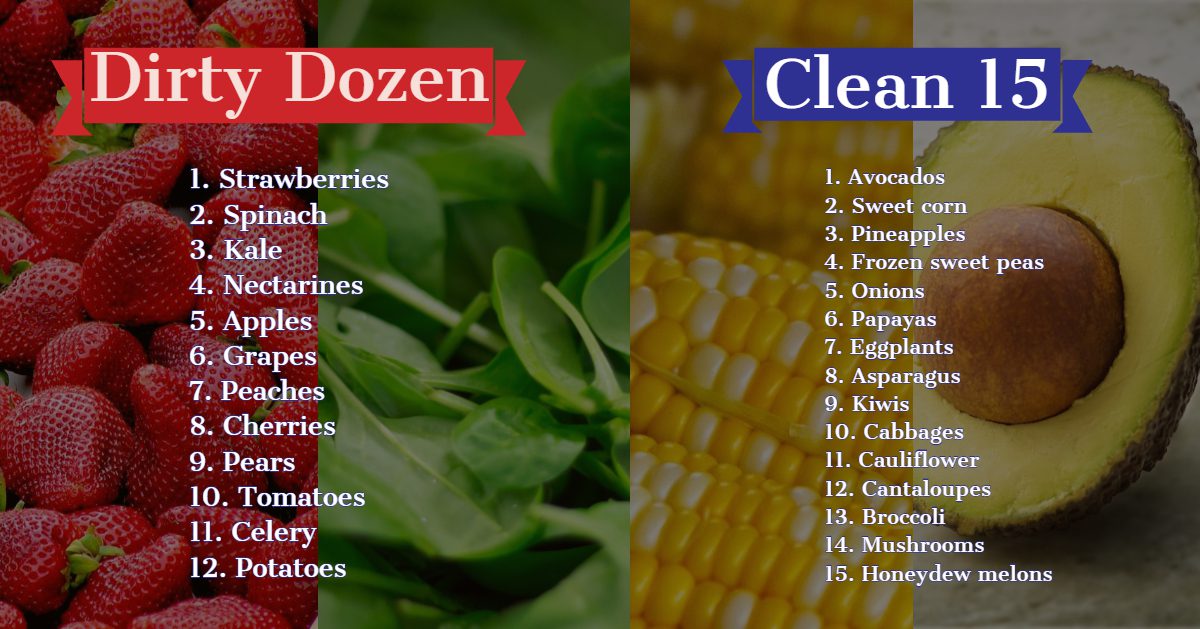
The “Dirty Dozen” & the “Clean Fifteen”

Here’s when it’s the most, and least, worth paying extra for organically grown produce by Karla Bowsher, Money Talks News

Strawberries rank as the “dirtiest” produce, at least according to one nonprofit. The sweet summertime staple earned the No. 1 spot on the Environmental Working Group’s latest annual ranking of fruits and vegetables with the most pesticide residue — the “Dirty Dozen” list.
More than 90% of strawberry samples tested positive for residue of at least two pesticides, according to EWG’s 
2019 Shopper’s Guide to Pesticides in Produce. And one strawberry sample tested positive for residue from 23 pesticides.
Testing conducted in California in 2015 found that nearly 300 pounds of pesticide was applied to each acre of strawberry crops. The fruits and vegetables that made the 2019 Dirty Dozen list are:

  1. Strawberries
  2. Spinach
  3. Kale
  4. Nectarines
  5. Apples 
  6. Grapes
  7. Peaches
  8. Cherries
  9. Pears
 10. Tomatoes
 11. Celery
 12. Potatoes

   These are the “dirtiest” out of 47 types of produce that EWG scrutinized this year. The group’s ranking is based on an analysis of more than 40,900 samples taken by two federal agencies, the Department of Agriculture and the Food and Drug Administration.

Opposite the Dirty Dozen in the ranking is what EWG calls the “
Clean Fifteen,” which were found to have little if any pesticide residue. For example, less than 1% of conventional avocados and sweet corn had any pesticide residue.
On the 2019 Clean Fifteen are:


  1. Avocados
  2. Sweet corn
  3. Pineapples
  4. Sweet peas (frozen)
  5. Onions
  6. Papayas
  7. Eggplant
  8. Asparagus
  9. Kiwis
 10. Cabbages
 11. Cauliflowers
 12. Cantaloupes
 13. Broccoli
 14. Mushrooms
 15. Honeydew melons


   EWG cites multiple studies that point to various health risks associated with pesticides, particularly for children. But when you shop for the Clean Fifteen, you can reach for conventional versions over organic versions to save money without having to worry about eating pesticide-ridden food.


Image result for dirty dozen list 2019


Thursday, May 23, 2019

Is Low-Dose Radiation Good for You?


The Questionable Claims for Hormesis

BY HARRIET HALL, M.D.

For most people, radiation is very scary. You can’t see it; you may not know if you’ve been exposed. We’ve all read the horror stories about Hiroshima and Nagasaki. When radiation leaked from the Fukushima reactor in 2011, people all the way across the Pacific Ocean feared for their health. Alarmist headlines blared “Fukushima radiation has reached U.S. shores!” Cesium-134 had been measured in seawater samples from beaches in Oregon, and in Canadian salmon. A senior scientist quelled fears by putting this news into context: “if you were to swim every day for six hours a day in those waters for a year, that additional radiation from the addressed cesium from Japan…is 1000 times smaller than one dental x-ray.”1

Most people think radiation is not natural. Actually, yes it is. We are exposed to radiation from cosmic rays. We get more background radiation if we live in the mountains or fly frequently, and if we live in stone or brick houses or in homes with radon in the basement. There is radioactive potassium in bananas, potatoes, beer, and many other foods. Tobacco leaves contain radioactive polonium 210, with a half-life of 138 days. It falls onto the tobacco leaves from the atmosphere and is a major cause of lung cancer. We are even exposed to radiation from our own bodies. There is no way to avoid it. We know that ionizing radiation damages and mutates DNA and can cause cancer.

Many people are convinced that all radiation is potentially dangerous. The Health Physics Society has set safety levels, and workers’ doses are maintained at levels as low as reasonably achievable (ALARA); but they point out that “There is considerable uncertainty associated with the estimation of risk from relatively low doses.” This doesn’t mean there is no risk, but rather that there may not be any risk, and if there is, we don’t know how to quantify it. The problem is that the risk is so low that many millions of people would have to be studied to overcome the signal-to-noise ratio in the data, and the risk is confounded by varying background levels of radiation and other factors like radiation from diagnostic procedures. It’s an impossible problem that may never be definitively solved because of the sheer numbers and the complexity of the data involved.

Since we can’t know for certain, we have to guess. We can choose to guess that low levels of radiation are harmless for all practical purposes, or we can choose to guess that any radiation is potentially harmful. But there is a third choice: we can believe that low levels of radiation are beneficial to health. It’s called hormesis. During the Fukushima episode, conservative commentator Ann Coulter wrote a column titled “A Glowing Report on Radiation.” She claimed that radiation is good for you! She said, “anyone exposed to excess radiation from the nuclear power plants is now probably much less likely to get cancer…radiation operates as a sort of cancer vaccine.”2 Her column was an irresponsible distortion of the facts.

Coulter cited several studies that she thought showed lower cancer risk with low-dose radiation. She misreported those studies, which either showed higher risk or failed to reach statistical significance. At one point in her article, she even admits that “it is hardly a settled scientific fact that excess radiation is a health benefit.” David Gorski demolished Coulter’s arguments in a blog post on Sciencebasedmedicine.org.3
What is Hormesis?
Hormesis is a biphasic dose-response to an environmental agent characterized by a low dose stimulation or beneficial effect and a high dose inhibitory or toxic effect. Some people argue that tiny doses of radiation are not harmful. Some scientists even claim that low doses, by stimulating DNA repair, make you healthier. Hormesis is hypothesized to be an adaptive response to intermittent stress. Another way of expressing this is “What stresses me within certain parameters makes me better adapted.” Maybe, maybe not. […]


Tuesday, May 21, 2019

Living in a Dream World

Not too long ago, we talked about William B. Irvine's Guide to the Good Life in which he shares some practical tools to master "The Ancient Art of Stoic Joy." Here's a fun little perspective-shifting tool.

He tells us that it's REALLY easy to take things for granted. To counter this tendency (that scientists calls Hedonic Adaptation and Maslow calls a "non-evil evil,"), we should consider spending some time thinking about how our ancestors lived. 


He says: "We will quickly discover that we are living in what to them would have been a dream world—that we tend to take for granted things that our ancestors had to live without, including antibiotics, air conditioning, toilet paper (!), cell phones, television, windows, eyeglasses, and fresh fruit and vegetables in January. Upon coming to this realization, we can breathe a sigh of relief that we aren't our ancestors, the way our descendants will presumably someday breathe a sigh of relief that they aren't us!     

The next time you start complaining about the plumbing, think back to a time not-too-long-ago when we didn't even have toilet paper. (Alas, what did we do?!) Air conditioning in the car not getting cool enough for you as fast as you'd like? Right. Remember that 100 years ago you would have been riding a horse.

Cell phone reception spotty? You do realize you're talking into a piece of plastic and somehow, MAGICALLY, communicating to someone far, far away... Right? Internet slow? Remember you have access to more wisdom and entertainment (and nonsense) than ever imaginable!

It's easy to take things for granted. But...Let's remember that, in a vast number of ways, compared to our ancestors, we live in a DREAM WORLD!!

Practically-speaking, if you feel so inspired, take a moment and look at your current environment. Find something technologically advanced that you may take for granted. Maybe it's your phone or your car or your computer or even a light bulb.

Can you see the magic in it?! Awesome. Keep that perspective nice and fresh today. And, remember that OUR ancestors will laugh at the primitive conditions in which WE live today.


Thursday, May 16, 2019

Here’s What Can Happen When You Try to 'Beat' Traffic Lights

Saving 90 seconds isn't worth the risk. Just don't do it.

One of the first things we learn at a young age is the meaning behind red, yellow, and green—our traffic signal colors. Even though it’s ingrained in the memory of so many, it’s easy to take them for granted—and ignore the dangers of not doing what they instruct, like running red lights.

According to the National Highway Safety Traffic Administration, in 2016 more than 800 people were killed in crashes involving running traffic signals. An estimated 137,000 were injured as a result of not obeying traffic lights in the same year.

Read the full article


A Disproof of God’s Existence

BY COLIN MCGINN

The traditional definition of God credits him with three attributes: moral perfection, omniscience, and omnipotence. These are supposed to be logically independent, with none entailing the others. But that is not obviously correct: How is moral perfection possible without omniscience and omnipotence? How is it possible to be omnipotent without also being omniscient? Isn’t omniscience a type of omnipotence—a power to see and know everything? In fact, can’t we simply define God in terms of omnipotence, since his other attributes flow from this? If God is omnipotent he must be morally perfect, since he has the power to be morally perfect, and why would he not exercise that power? And if he is omnipotent he must be omniscient, since omniscience is an epistemic power. At the least he has the power to be both morally perfect and all knowing, given that he is all powerful. Thus omnipotence seems to be basic in the definition of God. God differs from lesser beings precisely in having powers they do not have—moral powers, epistemic powers, and other powers (causing earthquakes, healings, etc.). God is replete with power, overflowing with it, by no means lacking in it. Any power there is, he has.

But is that right? Does God have every power? He has the power to create and destroy universes, but does he have the power to sneeze or digest food or pick his nose? Those powers require possession of a body with a certain anatomy, but God has no such body, being disembodied. Does he have the power to decay or split or emit radiation? How could he have these powers given his immaterial nature? Does he have the power to come down with a cold or be bed-ridden or have the runs? Surely not: God has the powers that are proper to his divine nature, not any old powers that things of other natures have—animals, plants, atoms. God essentially lacks certain powers as a condition of being who he is. He has the powers of a god not of a worm or cactus plant. Everything must lack something in order to be something, i.e., to have a determinate nature. […]