My blog has evolved considerably since I first started it in 2004. I still attempt to update it with sometimes relevant and/or random observances as often as possible, but I can never promise which way the wind will blow on these things. Change is the only certainty.
To pee or not to pee in the shower, that is the question. Various surveys have shown that lots of people do it—one questionnaire on BuzzFeed found that more than 80% of those surveyed say they do.
Now IFL Science weighs in on the issue, noting that relieving ourselves while showering can help conserve water. In fact, estimating that people pee on average seven times a day, the site calculates that taking away one 1.6-gallon flush across 319 million Americans every day could conserve 185 billion gallons of water a year, which is no small matter.
Mic, which is clearly biased in favor of peeing in the shower being "awesome," reports that some of this conservation is likely lost in added shower time ("Who among us, mid-shower pee, hasn't stared off into oblivion as the hot water cascaded down our bodies?").
Still, that 0.875 gallon of water that will escape the shower head in the 21 seconds it takes for the average person to pee is still less than the 1.6 gallons—more in older toilets—used to flush urine away.
(It turns out that all mammals, regardless of their size, pee in about 21 seconds.) And for those who wipe when they pee, they could save an entire roll of toilet paper every 50 days.
Life’s too short. You may not have control over the giant meteor that hits you in the head while you’re walking down the street. But assuming your unlucky lottery number doesn’t come up, you have a remarkable amount of control over how long you live. It turns out, lifestyle is more important than genetics in determining how long you’ll live, according to a study from the University of Gothenburg published in the Journal of Internal Medicine.
And luckily, the lifestyle changes that can score you more years can also score you more quality years, according to Eudene Harry, M.D., medical director for Oasis for Optimal Health wellness center in Orlando and author of "Live Younger in 8 Simple Steps."
To that end, we found eight healthy habits that can add 35 years to your retirement plan.
Get More Friends: Add 7 Years
When it comes to friendship, the more the merrier (and healthier). In a study of 1,477 people in their seventies, Australian researchers found that people with the most friends had a seven-year-longer lease on life. While friends can provide a support network and can help people pull through tough times, biochemistry may also play a role, says Harry.
“The act of befriending actually enhances the production of oxytocin,” she says. Oxytocin (the cuddle hormone) has a calming effect on the brain and could be the secret behind friendship’s ability to improve blood pressure, decrease binge eating, and heal faster, she says.
Use a Standing Desk: Add 2 Years
Using a standing desk can add two years to your life.Photo Credit moodboard/moodboard/Getty Images
Forget about a numb behind: When sitting, your circulation slows, you burn fewer calories, your sugar metabolism stagnates, and the enzymes responsible for breaking down triglycerides switch off, according to Susan Block, faculty member for the American Council on Exercise and director of fitness for the California Health & Longevity Institute. So get off your bottom more often. A 2012 study published in BMJ Open found that reducing your on-the-tush time to less than three hours a day can increase your life expectancy by two years.
Block suggests setting up a standing desk, walking when you are on the phone, leaving your snacks in the office kitchen so you have to walk to get them, or even scheduling meetings as a walk around the building. “Even standing once an hour for 5-10 minutes can go along way to help you feel better and live longer,” she says.
Floss: Add 6 Years
Regular flossing can add six years to your lifePhoto Credit A Carmichael/The Image Bank/Getty Images
By allowing inflammatory substances to travel into the body, dirty chompers have been linked to increased risk for heart disease, stroke, diabetes, and even autoimmune diseases such as rheumatoid arthritis. So important is oral hygiene that regular flossing can add 6.4 years to your life, according to research from Michael F. Roizen, M.D., the chief wellness officer at the Cleveland Clinic and co-founder of RealAge.
Even flossing every other day for six months can reduce the levels of C-reactive protein, a marker of inflammation that increases the risk of cardiovascular disease, to return to normal, according to research from the International Heart and Lung Institute.
Eat a Cup of Raw Veggies a Day: Add 2 Years
Your mom was right: Finish your vegetables. Men who eat at least 60 grams (about 1 cup) of veggies a day are going to live, on average, two years longer than people who eat less than 20 grams a day.
While both raw and cooked vegetables have numerous phytochemicals and antioxidants that make them lengthen lifespans, a nutritional review published in the Cancer Epidemiology Biomarkers Preview found that raw vegetables have a stronger effect. Cooking (especially boiling) can zap up to 50 percent of the antioxidants in some vegetables, according to a 2009 study published in the Journal of Food Science.
Think Positive: Add 7 Years
Laughter and positivity can add seven years to your life.Photo Credit George Doyle/Stockbyte/Getty Images
“Studies confirm what we’ve suspected for some time: A positive outlook on life and laughter can actually help you to live longer,” Harry says. For example, a Yale University study of older adults found that people with a positive outlook on the aging process lived more than seven years longer than those who did not, while a 2012 study published in Aging found that positivity and laughter are defining characteristics in people who celebrate their 100th birthday.
Positive thinking increases the brain’s levels of the hormone Brain Derived Neurotropic Factor, which improves memory, helps to alleviate depression, and fights Alzheimer’s disease, Harry explains. What’s more, the simple act of laughing decreases levels of the stress hormone cortisol as well as inflammation, she says.
Reach Your Target BMI: Add 3 Years
A barometer of body composition, body mass index (BMI) compares weight to height by dividing weight measurement (in kilograms) by squared height measurement (in meters). Maintaining a body-mass index of 25 to 35 can shorten your life by up to three years, according to University of Alabama researchers. A BMI between 25 and 30 is considered overweight, while a BMI of more than 30 is considered obese.
By promoting inflammation, excess body fat raises your risk of diabetes, heart disease, stroke, sleep apnea, and colon cancer, while throwing hormones including cortisol, insulin, testosterone, and growth hormone out of whack, says Harry.
Eat More Nuts: Add 3 Years
Bar food might not be so bad. When Loma Linda University researchers studied the health habits of 34,000 Seventh-Day Adventists (a group known for its longevity) they discovered that those who ate nuts five days a week lived 2.9 years longer on average than those who ate nuts less than once a week.
Nuts decrease the risk of high blood pressure, insulin resistance, high cholesterol, unstable heart rhythms, and diabetes, Harry says. What’s more, their high protein and fat content can promote feelings of satiety and weight loss.
Exercise Regularly: Add 5 Years
Exercising regularly can add five years to your life.Photo Credit Thomas Barwick/Stone/Getty Images
Whatever your scale says, working out can help you live longer. A recent study from the National Cancer Institute examining 654,827 adults ages 21 to 90 found that those participants who exercised the most outlived those who exercise the least by 4.5 years.
The simple act of exercising—even if you don’t lose weight—improves mood, balances hormones, boosts memory, strengthens bones, decreases cholesterol, and prevents constipation, Harry says. For the biggest benefit, she suggests a combination of strength training and aerobic exercises.
Americans have set a new record for obesity, according to a report from the Centers for Disease Control and Prevention (CDC). As of 2015 when the data was gathered, 30.4 percent of U.S. adults were obese according to their body mass indexes. That’s up from 19.4 percent when the CDC started tracking obesity in 1997. The figure has risen steadily ever since.
For the report, researchers surveyed more than 8,000 Americans over age 19, asking them to divulge their weight and height. Then they calculated the participants’ BMIs and categorized people as “obese” if they had BMIs of 30 or higher.
It’s worth noting that BMI isn’t a perfect measure of health because it doesn’t differentiate between muscle mass and fat. But experts say it’s a good enough barometer for estimating the obesity rate in the population.
“We are not mistaking an epidemic of ‘totally awesome muscles’ for an epidemic of obesity,” says Men’s Health weight loss advisor David L. Katz, M.D.
In fact, since the findings are based on self-reported data, the actual obesity rate may be even higher, says William Dietz, M.D., Ph.D., an obesity researcher at George Washington University. Take a look at the data to see how Americans have ballooned since the 90s.
Except for 2003, obesity rates have steadily increased every single year.
The survey also finds that people age 40 to 59 are most likely to be obese. Men in this age group have higher rates of obesity compared to women.
Why Are More Americans Becoming Obese?
Dr. Katz says cultural forces are to blame: The food industry markets pastries and sugary cereals as suitable breakfasts and news organizations spread confusing messages about diet and weight loss.
Dr. Dietz, who previously served as the director of the Division of Nutrition, Physical Activity and Obesity at the CDC, thinks lack of self-awareness may play a role. Obesity is becoming the norm, and people are accepting it as such, he says.
“There are many people who think they don’t need to lose weight, when they actually do,” he says.
Although it may be common, obesity is, in fact, dangerous. It raises your risk for diabetes, high blood pressure, high cholesterol, cardiovascular disease, stroke, arthritis, and certain cancers, according to the CDC.
How to Solve the Obesity Epidemic
The best way to tell if your weight has become unhealthy is to measure your waist at its largest point, says Dr. Katz. This method won’t confuse muscle mass with fat.
If you top 40 inches, that’s a sign of trouble, he says.
Losing the weight isn’t going to be easy. But for smart steps that will take you in the right direction, check out Where to Start If You Have More Than 50 Pounds to Lose. It helped one guy lose 25 pounds in just 6 weeks.
Even if you’re currently at a healthy weight, the odds are stacked against you. People tend to gain 1 to 2 pounds a year from age 20 to 39, new research from Brown University finds.
Small steps can reverse that trend, though: One study found that people who made doable changes to their daily routines, like walking an extra mile or cutting 100 calories from their diet, lost 1.2 pounds and kept the weight off for two years.
And keeping your own weight down may be the key to solving the obesity crisis for future generations: There’s a known link between parental and childhood obesity, says Dr. Dietz.
“Preventing obesity in that 20- to 39-year-old age group may have promise for reducing the prevalence of obesity in kids, too,” says Dr. Dietz.
Sugar is the most used sweetener in food preparation, mostly derived from sugarcane and sugar beets. Called sucrose but also referred to as table sugar, it is a refined carbohydrate that, when broken down in the body, becomes half glucose and half fructose.
Various types of sweeteners are often substituted for sugar, which contains 40 calories per tablespoon, usually in hopes of lowering the calorie count, controlling blood sugar or generally improving health.
Sugar substitutes, a controversial topic, fall into one of two categories: natural sweeteners (which include sugar alcohols like erythritol) and nonnutritive sweeteners like sucralose (aka Splenda).
We took a deep look into the 12 sugar substitutes that are most likely to show up in your pantry and loosely ordered them from best to worst. However, talk to your doctor or registered dietitian nutritionist to find a sweetener that best suits your health situation.
We didn't include other forms of sugarcane and sugar beet extracts like brown sugar, specialty sugars like Turbinado and Demerara, or liquid sugars like molasses, even though some of those, like blackstrap molasses, offer more vitamins and minerals than most other sugarcane-derived products.
Dates are berries from palm trees. Photo Credit Getty Images
Dates
Dates are berries from palm trees that come in two types: soft dates and semi-dry. Using fruit as a sugar substitute is a good strategy for reducing added sugars because they are natural sugars that are accompanied by high dietary fiber, phenolic compounds, vitamins and minerals.
Dates, especially fresh rather than dried, have also been found to contain high levels of antioxidants and have antimutagenic properties, meaning they can potentially minimize the risk of cancer and cardiovascular disease, according to the Emirates Journal of Food and Agriculture.
With a glycemic index of 42, the fruit can be used to sweeten baked goods and smoothies — but note that a little can go a long way in terms of sweetness, especially when using dried dates. Also, different kinds of dates are different sizes and therefore the per date calorie count will be higher the larger and, in some cases, denser the date. For instance, Medjool dates are often larger than the more common Deglet Noor date and therefore have more calories.
Calories: 20 per date (7.1g)
Getty Images - Maple Syrup Photo Credit Getty Images
Maple Syrup
Maple syrup comes from boiling the sap from maple trees. The color of the syrup is a result of when the sap was tapped in the season; early season maple sap produces lighter syrup and later in the season, darker syrup.
The government specifies that maple syrup must contain at least 65.5 percent sugar among its other ingredients, like the acids and salts, to be authentically considered maple syrup, but many maple syrup products in stores today are blended with corn syrup and/or cane sugar syrup because maple syrup itself is expensive. Its glycemic index is 54, and it contains higher levels of minerals and fewer calories than honey.
Calories: 52 per tbsp
Getty Images - Honey Photo Credit Getty Images
Honey
Derived from the nectar bees create in their honeycombs, it takes an extraordinary amount of bees to create enough honey for humans to use. The sugars in honey are 40 percent fructose , 35 percent glucose and two percent sucrose. While honey can be used in baking, it should not replace sugar 1:1, and the liquid in the recipe must be adjusted due to the water content in honey. Honey also has a more pronounced flavor than sugar.
Although popular culture seems to believe honey is better than sugar, it is a pretty close comparison due to its composition, according a Huffington Post article. Indeed, its GI is 61, while table sugar is at 58, but it may offer some extra minerals, such as zinc and selenium.
Coconut palm sugar comes from sap from a coconut tree. It has a similar taste and texture as brown sugar. Many believe it is a better sweetening option due to its low glycemic index. However, according to the American Diabetes Association, it should not be treated differently than sugar as it has a similar profile, offering about the equivalent in calories and carbohydrates.
The glycemic index for coconut palm sugar is 35 because it is mainly sucrose with small amounts of fructose and glucose as well as inulin (a fiber that acts as a prebiotic), nutrients and antioxidants.
Agave nectar comes from the succulent plant agave, which comes from Mexico. The juice is extracted, filtered, heated and then hydrolyzed into syrup, a process similar to how high-fructose corn syrup is manufactured. Agave nectar is 90 percent fructose, while high-fructose corn syrup is 55 percent fructose.
Agave nectar is often used as a substitute for honey for vegans; however, it is much sweeter than honey, though, like coconut palm sugar, its GI is lower, at 15. Since it tastes very sweet, less is generally used, which is why some claim it is healthier. Yet because it still contains a high level of fructose, the level of healthiness in the long term is debatable.
Calories: 60 per tbsp
Getty Images - Stevia Photo Credit Getty Images
Stevia (Pure Via)
Stevia comes from the leaves of a South American plant called Stevia rebaudiana, which is 200 to 300 times sweeter than sucrose, but can be bitter with an astringent or metallic aftertaste. It is a newer sweetener in the United States, but it has been used in other countries, such as Venezuela, Brazil and Colombia, for more than a thousand years.
Stevia had been banned in the United States until 1995 when the FDA approved it as a dietary supplement. There's been some evidence that stevia can be mutagenic in bacteria and rats, but it has been recognized as safe due to the length of time humans have been using it.
An article in the journal Industrial Crops and Products states that studies on the toxicology of stevia have demonstrated that stevia poses no risks in humans when consumed as a sweetener. Stevia may even help to lower blood pressure in those that have hypertension. The glycemic index of stevia is 0.
Foods that are made with sugar alcohols (such as xylitol, sorbitol and erythritol) instead of sugar can be labeled as “sugar free” because of how low the calorie count is for sugar alcohols.
Sugar alcohols are not carbohydrates like sugar is. Sugar alcohol can be found naturally in produce, but most packaged varieties have been created in the lab. These alcohols are 20 percent to 100 percent as sweet as sucrose but are not digested by intestinal enzymes, which is why they have fewer calories. They're used in diet foods because of their ability to be slowly absorbed and because they do not contribute many additional calories.
Some sugar alcohols contribute a cooling sensation to the mouth, which is why they are used in items such as gums and mints. Another perk of sugar alcohols is that they do not contribute to dental caries (cavities) because bacteria cannot digest them.
One of the problems that arise from sugar alcohols comes from one of their pros, the slow digestion, which means that they move more slowly through the intestine, possibly causing abdominal issues like diarrhea, abdominal pain and gas. The glycemic index for sugar alcohols is much lower than others (for example, xylitol’s is 7).
Calories in xylitol: 30 per tbsp; calories in erythritol: 2.4 per tbsp; calories in sorbitol: 36 per tbsp
Getty Images - Brown Rice Syrup Photo Credit Getty Images
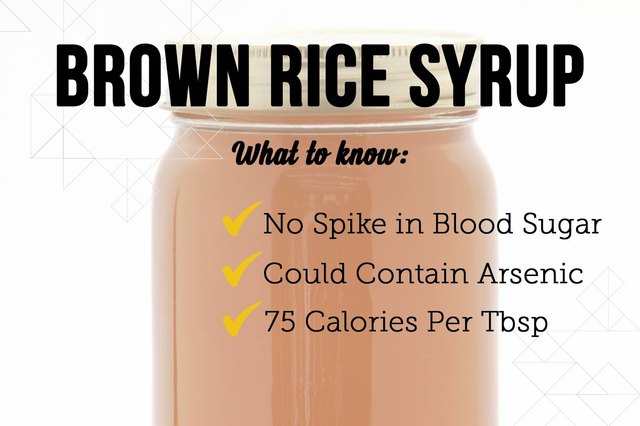
Brown Rice Syrup
Brown rice syrup is a viscous liquid that is derived from brown rice treated with enzymes to break down the starches, and, while not nearly as sweet as white sugar, it has a slight butterscotch flavor, lending well to some types of baking.
Due to it containing about 50 percent complex carbohydrates and 3 percent glucose, rather than only simple carbohydrates, its sugars are released more slowly into the bloodstream, creating a less visible spike in blood glucose.
However, according the "The Essential Good Food Guide" by Margaret Wittenberg, the level of glucose can be adjusted during the manufacturing process, so the glycemic index of the syrup can be dependent on the individual product. Also of note, there have been recent concerns about the levels of arsenic in brown rice because the plant absorbs arsenic from the environment as many plants do, and the hull, which is present in brown rice but not white rice, retains the absorbed arsenic, according to the Mineralogical Society of America.
The FDA has increased its arsenic testing of rice products since 2011 but has yet to release a comprehensive risk assessment, but Consumer Reports recommends limiting consumption, especially for children under 12 months.
Corn syrups are a byproduct of cornstarch production are often used in products to reduce the manufacturing cost. While corn syrup is essentially 100 percent glucose, high-fructose corn syrup can be anywhere from about 40 to 90 percent fructose, and because it is a synthetically made sweetener, a monosaccharide, the levels of fructose can be very high, rather than a combination of both fructose and glucose like sucrose.
It has a high sweetening power, it is not as sweet as sugar or agave nectar, so more of it may be used in packaged foods. Fructose moves quicker in the digestive system than glucose, so it may be harder to feel satiation, increasing consumption. The glycemic index of high-fructose corn syrup is similar to that of sucrose.
Sucralose is a nonnutritive sweetener that is able to withstand high temperatures, making it appropriate for baking. It is used in countless manufactured products, perhaps because it has a taste similar to sugar and does not have an unpleasant aftertaste like many other nonnutritive sweeteners seem to have. Sucralose is 600 times sweeter than table sugar.
There are controversial opinions about its affects on health even though it is considered safe for even pregnant and nursing mothers. According to a 2013 study in the Journal of Toxicology and Environmental Health found, it does in fact get metabolized once ingested and can negatively affect gut bacteria, impact the body's insulin responses and its broken down components can be gene altering.
Despite the controversies, it is not recognized in the body as a carbohydrate and therefore has been deemed as appropriate for patients with diabetes. The glycemic index of sucralose is 0.
Calories: Less than 5 per packet of Splenda (1 gram)
Getty Images- Saccharin Photo Credit Getty Images
Saccharin (Sweet Twin, Sweet’N Low)
One of five nonnutritive sweeteners approved by the FDA for use in the US, saccharin was discovered accidentally when a scientist had some residue left on his hands from the lab when he made dinner rolls that turned out extra sweet.
Saccharin is 500 times sweeter than sucrose. It is used now in many baked and processed foods, although one of the drawbacks of saccharin for some is its aftertaste. There also has been controversy about the safety after some research on rats, including an FDA-proposed ban in 1977.
Instead, there is a warning label requirement on items containing saccharin now. It may cause cancer, but it appears to be one of the weaker known carcinogens. It would take 800 twelve-ounce sodas sweetened with saccharin to reach a concerning level for carcinogenesis. There is not enough evidence to cause alarm about consuming saccharin to date. The glycemic index of saccharin is 0.
Calories: Less than 4 per packet of Sweet'N Low (1 gram)
Another one of the FDA-approved nonnutritive sweeteners, it is one of the most controversial artificial sweeteners and yet the most popular.
Aspartame is mostly found in soft drinks and is 180 times sweeter than sucrose. It does not elicit the same insulin response as regular sugar does in the pancreas. While there is controversy about the safety of nonnutritive sweeteners in the human diet, it seems that a portion of the population that consumes aspartame has a difficult time digesting the breakdown products of this sweetener, reporting headaches, dizziness, mood changes and nausea. Aspartame has also been linked to some cancers in some rat studies.
A study in the journal Research in Nursing & Health found that participants on a high-aspartame diet compared to those on a low-aspartame diet scored lower on spatial orientation tests and were more irritable and depressed; therefore, there may be some neurobehavioral effects of the consumption of aspartame, as other studies have demonstrated. Regardless of the controversy about some side effects and the potential as a carcinogen, individuals with phenylketonuria should not consume aspartame. The glycemic index of aspartame is 0.
Depending on who you listen to, aspartame is either a safe aid to weight loss and diabetes control or it is evil incarnate—a deadly poison that is devastating the health of consumers. Harriet Hall, M.D. examines the claims and explains how we know that aspartame is safe for almost everyone. Aspartame is a low calorie sugar substitute marketed under brand names such as Equal and NutraSweet. It is a combination of two amino acids: L-aspartic acid and L-phenylalanine. It is available as individual packets for adding to foods and it is a component of many diet soft drinks and other reduced- calorie foods. Depending on who you listen to, it is either a safe aid to weight loss and diabetes control or it is evil incarnate, a deadly poison that is devastating the health of consumers. A reader sent me an ad from his local newspaper that recommended using Stevia instead of aspartame, and made these startling claims about aspartame:
It is derived from the excrement of genetically modified E. colibacteria.
Upon ingestion, it breaks down into aspartic acid, phenylalanine, methanol, formaldehyde, and formic acid.
It accounts for over 75% of the adverse reactions to food additives reported to the FDA each year including seizures, migraines, dizzinesss, nausea, muscle spasms, weight gain, depression, fatigue, irritability, heart palpitations, breathing difficulties, anxiety, tinnitus, schizophrenia and death.
Looking for the secret to a strong, pain-free upper body? It could be as simple as putting the classic push-up into your exercise mix, but only if you perform and program it correctly. Here's how!
With all the new fitness trends and exercises getting camera time these days, the simple push-up can seem a little quaint. It's not something you often see anyone doing on their Instagram feed or bragging about in the comments. After all, why hit the deck to do basic sets of up-downs in a gym full of chest and shoulder equipment that's begging for you to load up on it?
Well, my dear fit friends, there are actually many reasons to heed the call of this classic upper-body exercise. Let's take a look at some of the unique benefits of the push-up, and then break down how to put it back into your program where it belongs.
WHY PUSH-UPS ARE WORTH YOUR WHILE
You might think a bodyweight exercise like the push-up doesn't provide enough "resistance" to stimulate growth and development of the chest, triceps, and shoulders. While it's true you can't replicate the same levels of absolute force you need when you perform, say, a 300-pound bench press, that doesn't mean the movement is a waste of time.
When muscle size is the goal, it's crucial to remember that what matters more than the weight lifted is the level of exertion your muscles experience. In simple terms, building muscle is largely (but not completely) a product of doing whatever it takes to fatigue and exhaust those muscles. It's why systems like German volume training (10 sets of 10 reps) work so well for hypertrophy despite the "light" loads the lifters are asked to use when doing it.
PUSH-UP
But why do 10 sets of 10 push-ups rather than the flat bench, incline bench, or chest press machine? It's all about what happens on the back of your body. In all of these bench presses, "good form" demands that your shoulder blades remain pinned to the bench throughout the movement. This can make for a stronger, safer bench, but it doesn't promote proper shoulder function at the end of the day. Your scapulae are designed to move, not just retract. You need to train both actions!
Enter the push-up, which allows for free mobility of the scapulae. When done right, with your shoulder blades separating and protracting at the top, the push-up is one of the best activators of the serratus anterior muscles. Use my video on scapular mobility as a visual aid:
LEE BOYCE ON SCAPULAR MOBILITY WATCH THE VIDEO - 3:37
Make sure to unlock your shoulders and spread your scapulae at the top of the movement. Both strengths are crucial if you dream of ever putting up a monster overhead press or bench, and will help ensure a longer, more productive lifting career overall.
PROGRESSING TO THE PUSH-UP
There's no shame in not being able to do a clean push-up. You'd be surprised how many otherwise strong people struggle to do good-looking push-ups, for the simple reason that they haven't been doing them. Luckily, there's an easy solution to this problem: Start where you are now, and get better by practicing, dammit!
People who can't do full-range push-ups from the toes often resort to planting their knees on the floor and doing modified push-ups. Women in particular are taught that this is the way to go, but in my opinion, this method creates too many opportunities to "cheat" on the way up. For that reason, it doesn't carry over as well to the real deal as it should. (And just to be clear, the "real deal" is the goal for men and women alike.)
Instead of going for your knees, I recommend getting used to doing push-ups from your toes by adding a slight elevation to your hand surface. The Smith Machine is a great tool here. Start at as high a level as you need, and focus on maintaining a rigid torso. Progression is as simple as lowering the bar to the next notch down.
A second option would be band-assisted push-ups, either with the band looped around the top of a rack, or even better, around the J-hooks.
TONY GENTILCORE BAND ASSISTED PUSH UP WATCH THE VIDEO - 0:16
Using a band creates assistance where you may need it the most, deep in the hole, and reduces it where you need it the least, at lockout. To progress this version of the push-up to an unassisted move, use a skinnier band, or set the band at a lower point, so it's not providing as much help as before.
HOW DEEP SHOULD I GO?
My answer to this question is not what you'll hear on most Saturday-morning TV aerobics classes, where a 90-degree angle "blanket rule" is applied due to a combination of low knowledge and safety concerns. In truth, how deep you drop depends on you and your shoulder health. Different people have different construction to their shoulder anatomy, as well as different injury and lifestyle histories, so bearing load in deep positions can cause varying amounts of discomfort.
With that said... In an ideal world, the human body should be able to bear load in any position pain-free, within reason. So if you don't have a history of shoulder injury and you're pain-free, there's no reason why you shouldn't go to full range of motion when performing push-ups, as long as it doesn't hurt you to do it. So the answer is, "Get down to the floor—unless you have a good reason not to!"
HOW MANY PUSH-UPS SHOULD I DO?
In my opinion, the push-up is an exercise where volume is king. It doesn't mean you have to pull a Rocky Balboa out of the gates and gun for sets of 75 at a time. Chances are your form and technique will deteriorate over the course of the set if you do this.
What it does mean, however, is that building up to doing multiple sets of 15-20 reps is a better ultimate goal than stopping once you can knock out a few sets of 6-8 reps. Expose those muscles to plenty of reps, especially if you want to add size and thickness to your chest and triceps. Take advantage of your body weight, use shorter rest intervals, and crank them out.
HOW DO I PROGRAM PUSH-UPS?
Push-ups seem simple, but you'll get the most bang for your buck if you program them smartly. Remember, they're still a pressing movement, meaning they'll create stress on the shoulder joints if they're not prepared to bear the load.
Personally, I don't recommend starting off with straight push-ups while cold. Prepare your shoulders by promoting some stability through pulling exercises. Any row variation is a good way to put some blood into the scapular muscles and light up the tissue to protect the shoulder capsules. Personally, I love pairing paused lat pull-downs with push-ups.
LEE BOYCE PAUSED REP LAT PULLDOWNS WATCH THE VIDEO - 0:33
Other pulling movements—both horizontal and vertical—will work well here. But in general, I like programming push-ups (or any press movement, for that matter) after pull movements. So, if you're doing a full upper-body workout, it's smart to put push-ups second in your supersets, after your back exercises.
Programming push-ups first (after your warm-up) will prefatigue you if you have any other big pressing movements planned. This can work well for some goals, but if you're going after raw strength with your big pressing moves, it would be a better idea to save the push-ups for afterward.
Push-ups also work really well as a chest-day finisher. The push-up is a fairly big movement that, done with high reps at the end of your session, can provide a metabolic "kick," a massive pump, and a release of additional hormones.
PUSH ON!
You haven't outgrown the push-up. Going old school and adding a few sets to your program could be the smartest choice you make this year. Not only will it promote healthier shoulder function, it'll keep you in mastery of your own body weight. Sometimes, we get so caught up lifting weights that we forget this important skill. Relearn it, and you won't regret it.